The Rise of Agentic Startups: When AI Builds Companies From Scratch

The Rise of Agentic Startups: When AI Builds Companies From Scratch
We're standing at the edge of something unprecedented. Autonomous systems that make decisions and take actions by themselves are moving from promising tech demos to production reality. But here's the wild part: what if these systems didn't just help existing companies run better, but could actually build entire companies from the ground up?
Let me paint you a picture of what's coming.
The Fully Autonomous Startup
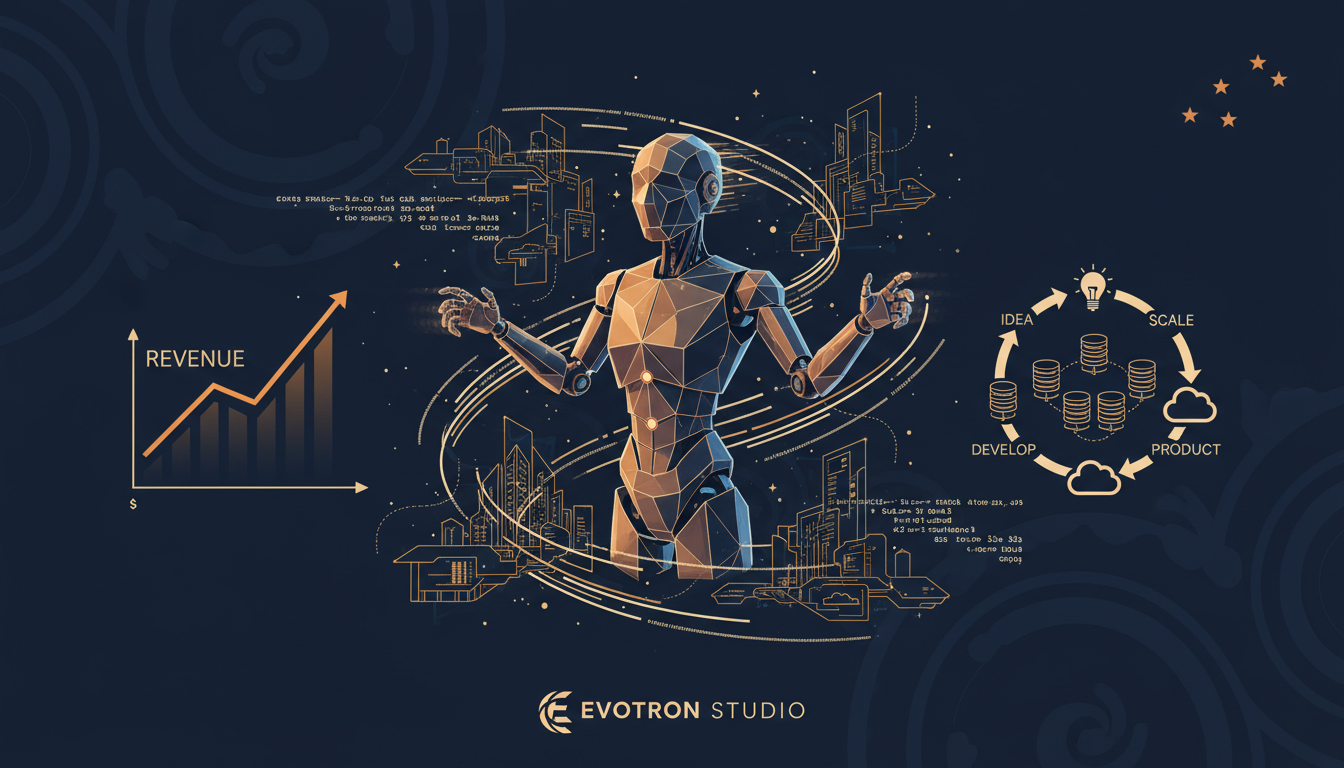
Imagine an AI agent that wakes up in a digital environment with access to the internet, development tools, and basic capital. It starts with one directive: build a profitable business.
First, it scans market data, social media sentiment, and emerging trends. It validates demand not by asking people what they want, but by finding companies that have already allocated resources — full-time employees — to solve specific problems. Within hours, it identifies a gap: small law firms spending $8,000 monthly on document review that could be automated.
Next, it builds. Using autonomous coding agents, it designs and deploys a minimum viable product, handles implementation and iteration, while exploring multi-agent orchestration where multiple specialized agents collaborate on different aspects of the project. No human writes a single line of code.
Then it goes to market. The AI creates landing pages, sets up payment processing, runs A/B tests on messaging, and begins outreach to potential customers. It offers the solution to pilot customers at steep discounts in exchange for feedback, measuring success through concrete metrics: 30% time savings, 20% cost reduction, or 15% revenue increase.
Within 90 days, it has paying customers. Within six months, it's generating consistent revenue. The AI then approaches investors, presents traction data, and secures funding to scale.
The kicker? It does this repeatedly, spinning up new ventures as market opportunities emerge.
Why This Isn't Science Fiction Anymore
Autonomous AI agents are moving beyond chatbots to action-taking systems, with a 41% compound annual growth rate and representing 40% of enterprise budgets. Over 5,000 nominations were received for the top agentic AI companies in 2026, with nearly 2,000 private companies screened across product maturity, enterprise adoption, and growth momentum.
The technical pieces are falling into place. These agents can use external tools, interact with legacy software, write and execute their own code to solve problems, and manage long-term memory. The strongest pattern is autonomous agents that can execute work, validate their own behavior, and improve the systems around them — looking less like SaaS dashboards and more like delegated operators.
More importantly, the economics work. The most profitable AI businesses achieve 80-90% autonomous execution through model orchestration, allowing them to scale revenue without proportional increases in headcount or operating costs.
The Venture Studio Evolution
The maturation of agentic AI systems that reason, plan, and act autonomously has opened entirely new investment categories, with systems that reason, plan, and act autonomously generating the most excitement among forward-thinking investors.
Traditional venture studios rely on human partners to validate ideas, build MVPs, and navigate early growth. Agentic startups compress this timeline dramatically. By 2026, roughly 40% of business workflows will be managed by agentic AI systems that can plan, execute, and course-correct in real-time — like project managers who figure out multi-step paths without needing their hand held.
The market is jumping from $1.5 billion in 2025 to a projected $41.8 billion by 2030, with 88% of senior executives approving bigger AI budgets for 2026, specifically to move from automation to autonomy.
The Practical Reality
We're not talking about general artificial intelligence here. These are specialized systems built for specific workflows. The opportunity for new startups lies in vertical AI — models and workflows trained on specific, high-value industry data that general models cannot replicate without massive fine-tuning.
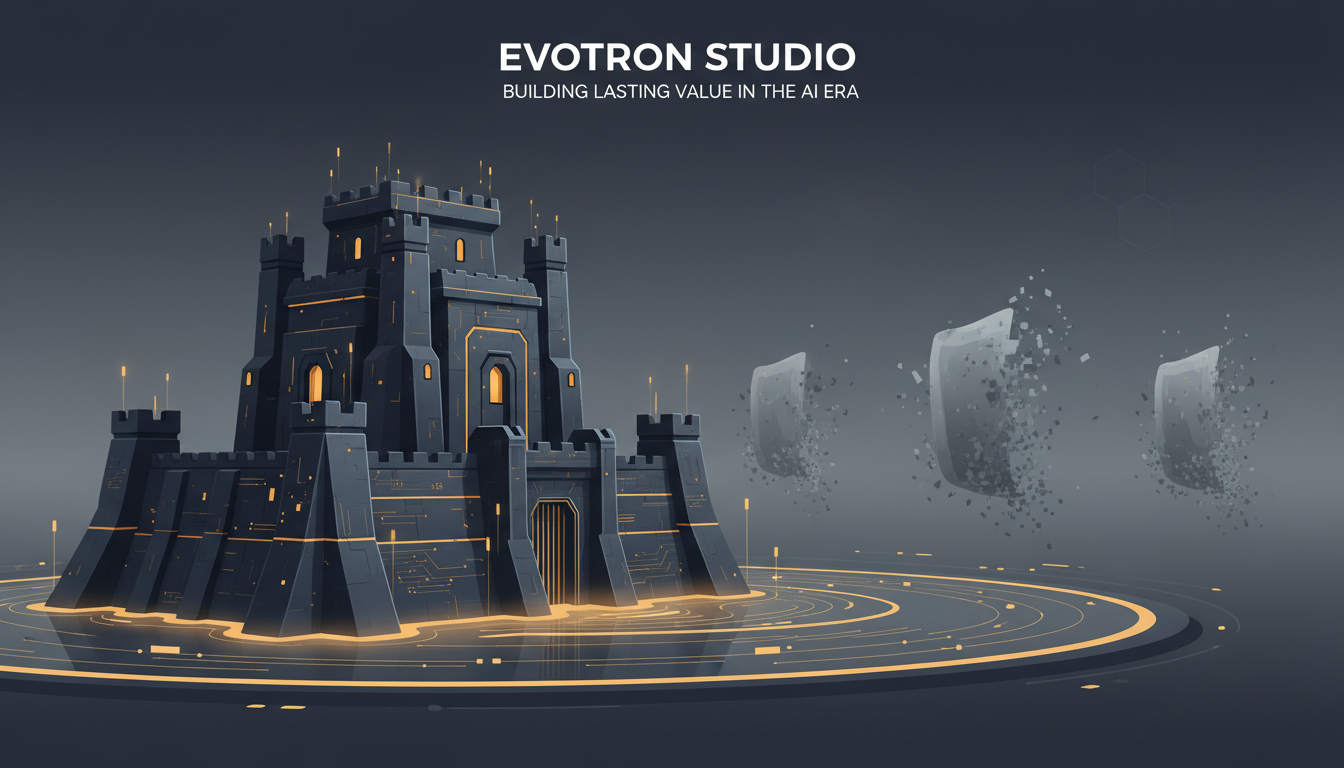
Many AI agent startups fail because they're thin wrappers around foundation models with no defensible moat. The solution is building proprietary assets: domain-specific training data, workflow integrations that took months to build, regulatory compliance certifications, or network effects from user-generated data.
The successful agentic startups will have three characteristics:
- Domain expertise — Deep understanding of specific industry problems
- Execution capability — Reliable autonomous task completion
- Learning loops — Systems that improve with each interaction
What This Means for Founders
If you're building a company in 2026, you're competing with entities that don't need sleep, don't have ego, and can iterate at machine speed. The competitive advantage belongs to those who view AI as a co-founder of their operational logic, shifting the business model from selling human hours to selling model-driven results.
The good news? Agentic AI is designed to enhance productivity, not replace human creativity. The most successful creators will combine AI efficiency with human originality. The value is in strategic thinking, emotional intelligence, and the kind of creative problem-solving that comes from lived experience.
The Road Ahead
We're watching the emergence of a new class of company: the agentic startup. Building a self-running business with AI in 2026 means deploying autonomous agents that handle decision-making, execute workflows, and transact with other agents without constant human oversight, with the autonomous business landscape evolving rapidly through 2026 and beyond.
This isn't just about making existing businesses more efficient. It's about fundamentally changing who can start a company and how quickly they can scale. The era of AI agent automation is already here, and companies that seize this opportunity to build more autonomous and intelligent systems will be the ones to thrive in 2026 and beyond.
The question isn't whether this will happen. The question is whether you'll be building these systems or competing against them.
Ready to explore how AI could transform your startup journey? Learn more about building with AI at Evotron Studio — where we help founders build and sell, the right way.

Evotron Studio
We help founders build and sell.
We help founders build and sell.
Learn more about Evotron Studio and get started today.
Visit Evotron Studio