Why domain experts keep stalling before they start
If you have spent 20 years earning real expertise in an industry, you probably have a startup idea sitting somewhere in a notes app. Maybe a deck you built on a weekend. Maybe a problem so obvious to you that it almost feels unfair nobody has solved it properly yet.
And yet, you haven't started.
This post is about why. Not the surface reasons, like not having enough time, or waiting for the right moment. The structural reason. The one that keeps domain experts specifically frozen while less experienced founders with worse ideas move faster.
The real cost of pre-team paralysis
Most domain experts frame the delay as a resource problem. They tell themselves they'll start once they have a co-founder, a developer, a designer, or a small war chest. That framing sounds responsible. It isn't.
In fast-moving or technology-adjacent markets, every month you spend assembling a pre-launch team can be a month your market position deteriorates without you noticing. Timing risk varies by market type, but where it applies, the window for your idea is real and it does close. Competitors, adjacent products, and shifting buyer priorities don't wait for your org chart to fill up.
The cost isn't just time. It's the compounding erosion of founder confidence that happens when you're in planning mode for twelve months without shipping anything. The idea gets heavier the longer you carry it without moving. Doubt accumulates. In our experience, the version of the idea you finally launch can be flatter and more risk-averse than the one you had at the start — though the opposite is also true: deliberate planning can sharpen and clarify an idea. The difference often comes down to whether the time spent waiting produces real learning or just accumulated anxiety.
That's what pre-team paralysis actually costs. Not just the months. The conviction.
Hiring before validating is the most expensive mistake you can make
There's a specific instinct that domain experts have, shaped by their corporate careers, that founders with less experience don't share: the instinct to staff up before doing anything.
In a corporate context, that instinct is right. You need a team to ship a project of scale. But in a startup context, hiring before you've validated the problem-solution fit is how you burn $200k before you've spoken to a single paying customer.
The sequence matters. Validate first. Ship something small. Get a real signal. Then staff.
Doing it the other way around is expensive even when it works, and catastrophic when it doesn't, because you've built an organization around an unvalidated assumption.
The high failure rate of AI pilots isn't just a corporate problem
Here's a pattern worth sitting with. Research from multiple sources — including McKinsey's annual State of AI reports and Gartner's analysis of enterprise technology adoption — consistently finds that a large majority of enterprise AI pilots fail to produce measurable business impact. Estimates of the failure rate vary by methodology and definition, but the directional finding is consistent: successful AI deployments at scale remain the exception, not the norm.
That's the enterprise AI context. But the same failure pattern plays out at the solo founder level, just with smaller dollar figures and more personal stakes.
The failure mode is identical: build without validating, move without clear success metrics, invest in infrastructure before proving demand. Whether you're a Fortune 500 innovation lab with a $20M mandate or a domain expert with $50k from a redundancy payout, the stall pattern looks the same from the inside.
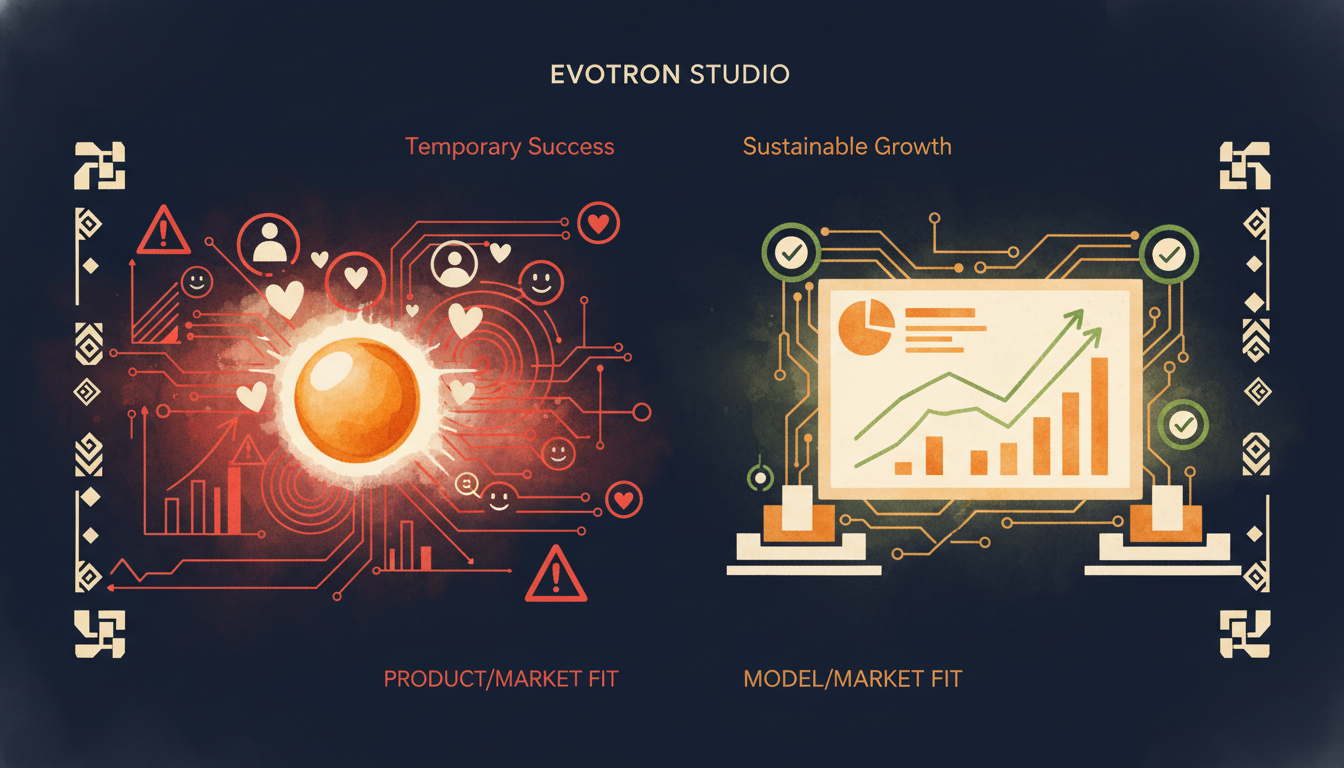
The lean startup model argues that the founders who ship are the ones who compress the cycle from insight to evidence. Rather than waiting until everything is ready, the approach is to define a minimum provable thing, get it in front of buyers, and treat the response as data.
The NZ market isn't waiting
If you're a New Zealand founder, this is a reasonable moment to pay attention to timing.
New Zealand startup investment grew significantly through 2025, with multiple reports from NZVCA and Young Company Finance indicating a strong rebound in capital deployment following a subdued 2023–2024 period. [Cite the specific NZVCA or Young Company Finance report and date here once confirmed.] Capital is back in the market and moving.
But here's the detail beneath the headline. A disproportionate share of recent deal activity appears to be cycling through follow-on rounds in existing portfolio companies, with the pipeline of brand-new ventures remaining comparatively thin — a pattern reported anecdotally by several New Zealand investors and consistent with global early-stage market dynamics in 2025–2026.
That's both a problem and an opening. Founders who get moving in 2026, validate something real, and show up to the angel and pre-seed market with evidence rather than a deck, are entering a market where there may be more investors than fundable new companies.
The window isn't closing. But it does compress. And every month of pre-team paralysis is a month you're not in it.
Why domain experts specifically get stuck
It's worth being direct about why this affects domain experts more than other founder archetypes.
First, you know too much. You can see every possible failure mode for your idea because you've watched them play out in your industry for two decades. That visibility is valuable, but it also makes you conservative in ways that a 26-year-old first-timer simply isn't.
Second, you've been conditioned by institutional timelines. Corporate projects run on 12-month cycles with quarterly reviews and sign-off gates at every stage. The idea of shipping something in six weeks feels reckless to someone whose professional career has been structured around moving carefully.
Third, you're self-reliant to a fault. You built your expertise alone, through accumulation and experience. You're not naturally inclined to ask for help or to run lean on capability you think you should have yourself.
None of those things make you a worse founder. They make you a better one, if you get past the starting line.
You don't need a team. You need a driver.
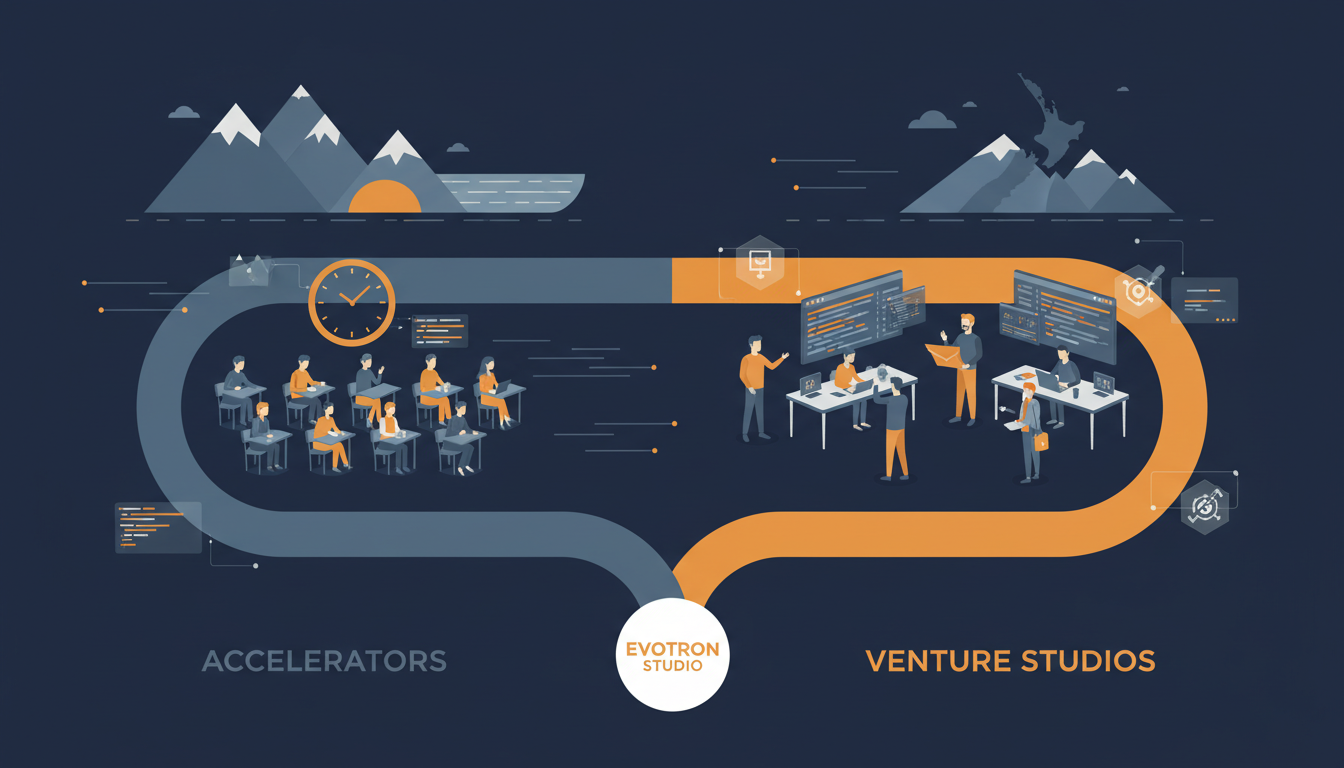
The model that works for a domain expert founder in 2026 isn't the traditional one. You don't need to hire a designer, a developer, a growth person, and a brand strategist before you build anything. You need one senior operator who already has that stack built and can deploy it on your behalf.
That's what Evotron Studio is. One senior Kiwi operator, backed by our own agentic platform Supramono, delivering full-stack capability typically requiring a much larger team — in 6–12 weeks at agency price. We've built multiple live products ourselves using exactly this model, including Supramono and others. Those aren't case studies. They're live products you can evaluate directly at evotronstudio.co.nz.
You bring 20 years of earned advantage. We bring the build stack. You stay the visible founder. We get out of the way at month 3–6 and graduate you onto Supramono for self-serve operation.
Every engagement is structured around go/no-go decision points so you always know what you've bought and what comes next. Unlike open-ended retainer engagements, we structure fixed decision points so the work has a defined shape — you're not on the hook indefinitely.
If you've been sitting on an idea that deserves to be a company, the stall ends when you decide it does.
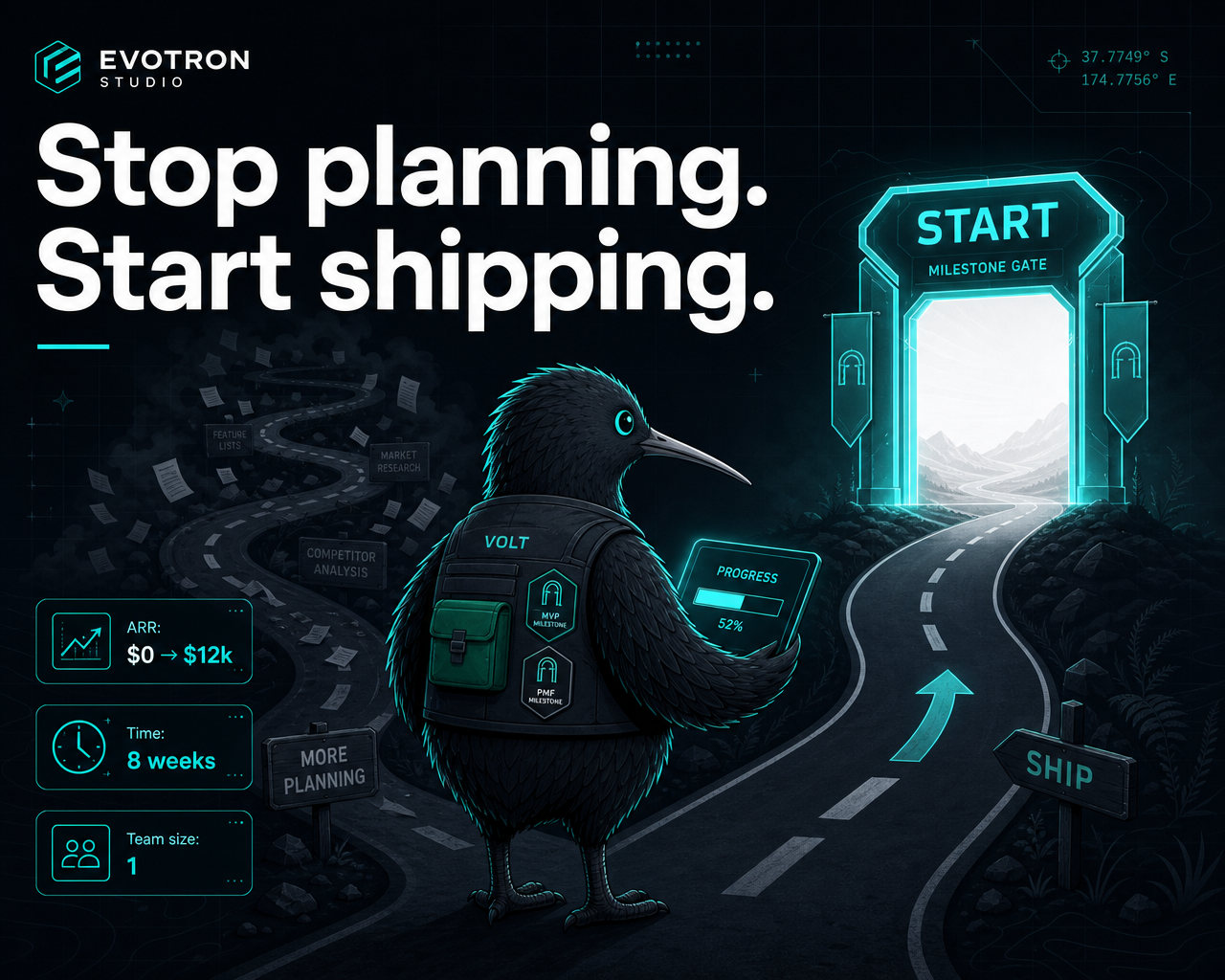
Ready to stop planning and start shipping? Tell us about your idea at Evotron Studio and we'll give you a straight read on whether we're the right fit.

Evotron Studio
Senior operator. Senior strategist. Twelve agents in the toolbox. We use AI so you don't have to.
Senior operator. Senior strategist. Twelve agents in the toolbox. We use AI so you don't have to.
Learn more about Evotron Studio and get started today.
Visit Evotron Studio