AI Microteams: The Delivery Model Replacing the 10-Person Squad
Why the 10-person sprint team is starting to look like a legacy cost
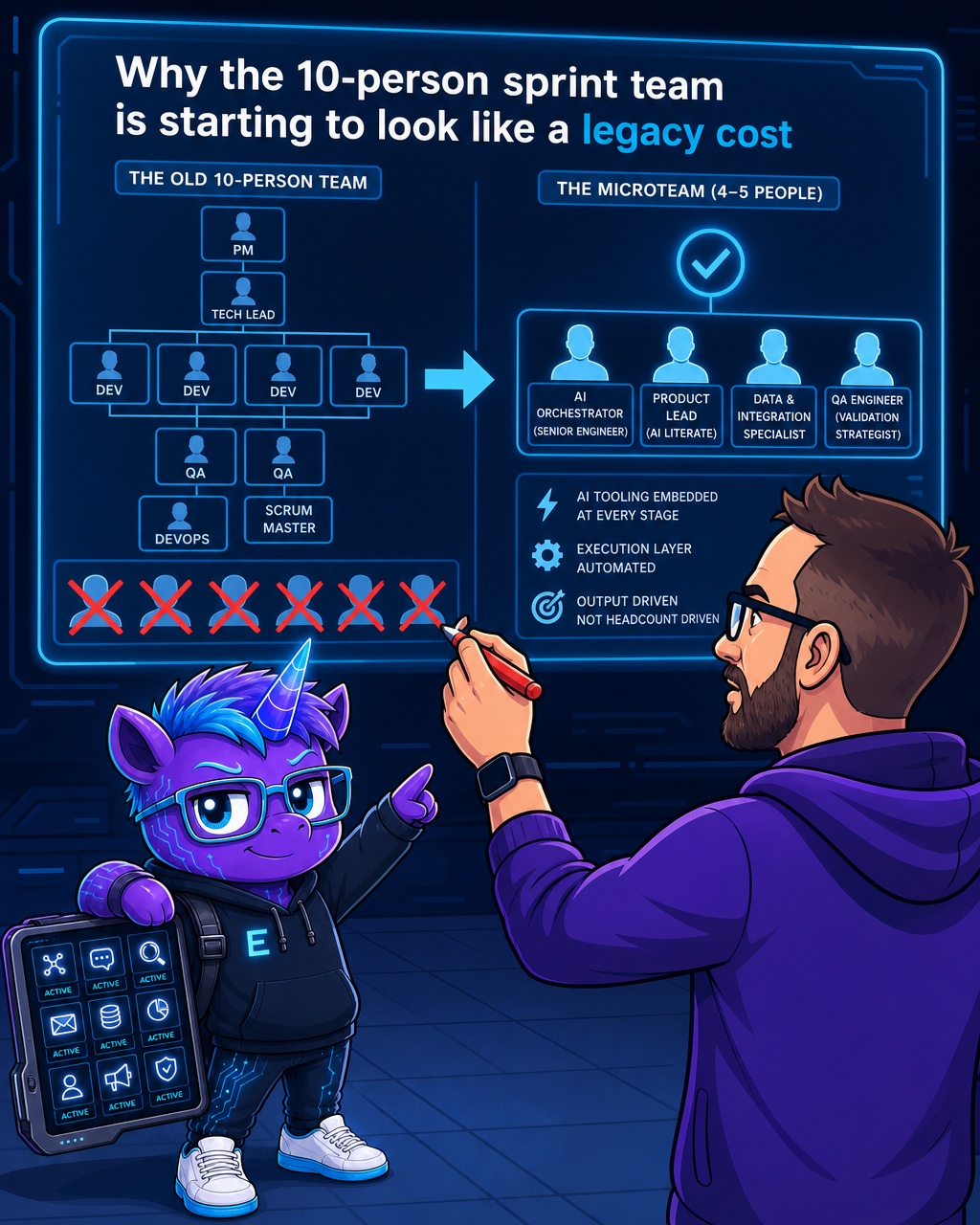
Not long ago, shipping software required a cast of specialists. You needed a product manager, a designer, two or three developers, a QA engineer, a DevOps person, a scrum master, and someone to write the tickets nobody read. That was just the floor.
That model made sense when every specialisation had to be carried by a human. It doesn't anymore.
Consider a mid-size product team that historically ran with 10 people: one PM, one tech lead, four developers, two QA engineers, one DevOps, one scrum master. In an AI-first restructuring, that same team's output is achievable with a pod of four to five — a senior engineer serving as AI orchestrator, a product lead with AI literacy, a specialist focused on data and integration quality, and a QA engineer focused on validation strategy rather than test execution.
This is the microteam. Three to six senior people, AI tooling embedded at every stage, and a delivery model built around the assumption that much of the execution layer is now automated. It's not a startup hack. It's a structure that a growing number of engineering organisations are exploring in 2026.
What's actually changed to make this viable
The honest answer is: the tools got genuinely capable, and the data is catching up.
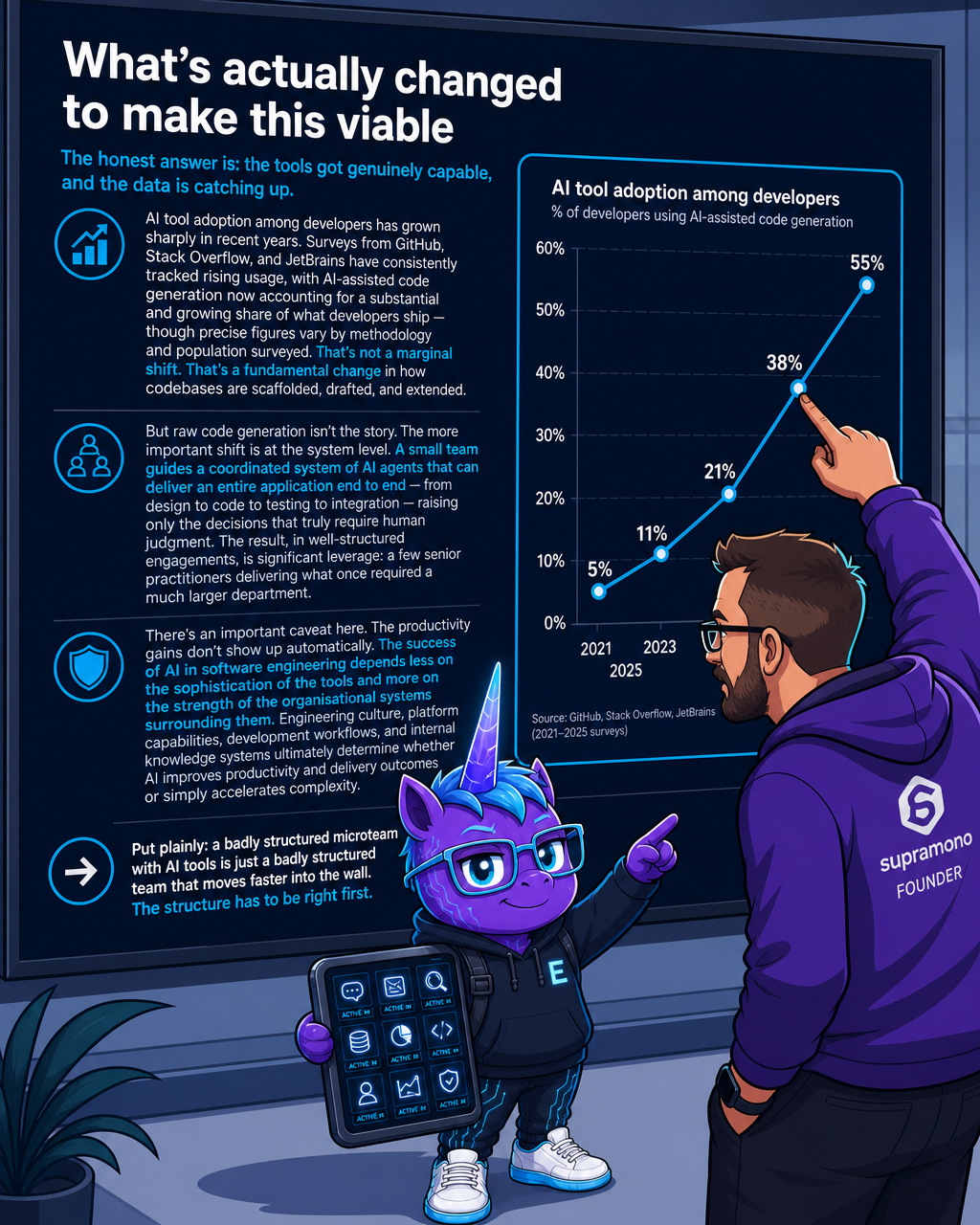
AI tool adoption among developers has grown sharply in recent years. Surveys from GitHub, Stack Overflow, and JetBrains have consistently tracked rising usage, with AI-assisted code generation now accounting for a substantial and growing share of what developers ship — though precise figures vary by methodology and population surveyed. That's not a marginal shift. That's a fundamental change in how codebases are scaffolded, drafted, and extended.
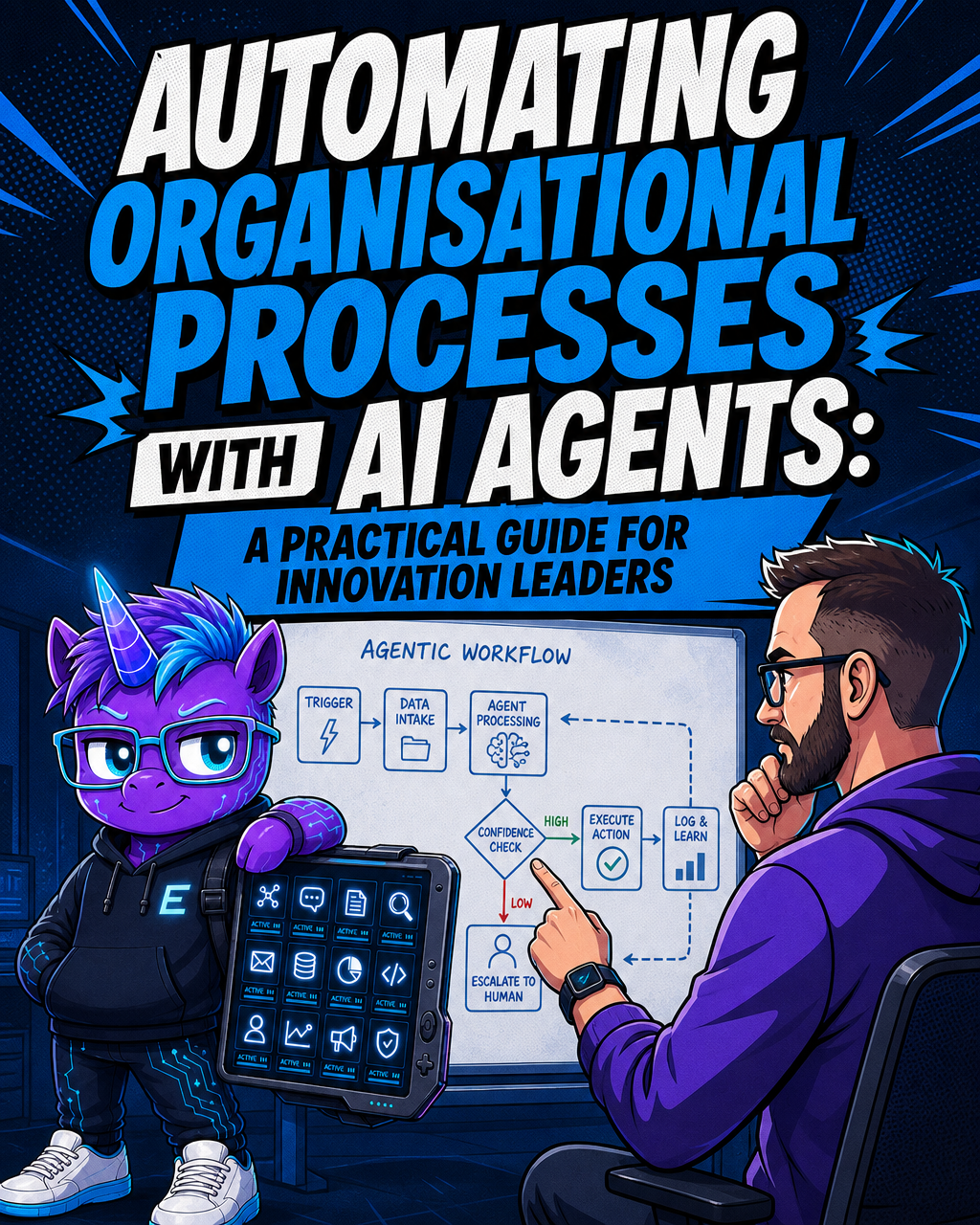
But raw code generation isn't the story. The more important shift is at the system level. A small team guides a coordinated system of AI agents that can deliver an entire application end to end — from design to code to testing to integration — raising only the decisions that truly require human judgment. The result, in well-structured engagements, is significant leverage: a few senior practitioners delivering what once required a much larger department.
There's an important caveat here. The productivity gains don't show up automatically. The success of AI in software engineering depends less on the sophistication of the tools and more on the strength of the organisational systems surrounding them. Engineering culture, platform capabilities, development workflows, and internal knowledge systems ultimately determine whether AI improves productivity and delivery outcomes or simply accelerates complexity.
Put plainly: a badly structured microteam with AI tools is just a badly structured team that moves faster into the wall. The structure has to be right first.
Role clarity is the non-negotiable foundation
The biggest failure mode in small teams isn't tool selection. It's ambiguity about who owns what.
In a microteam, every person carries multiple disciplines. That's the point. But without explicit role delineation, you get something worse than a large team — you get a small team where everyone's waiting for someone else to make a call.
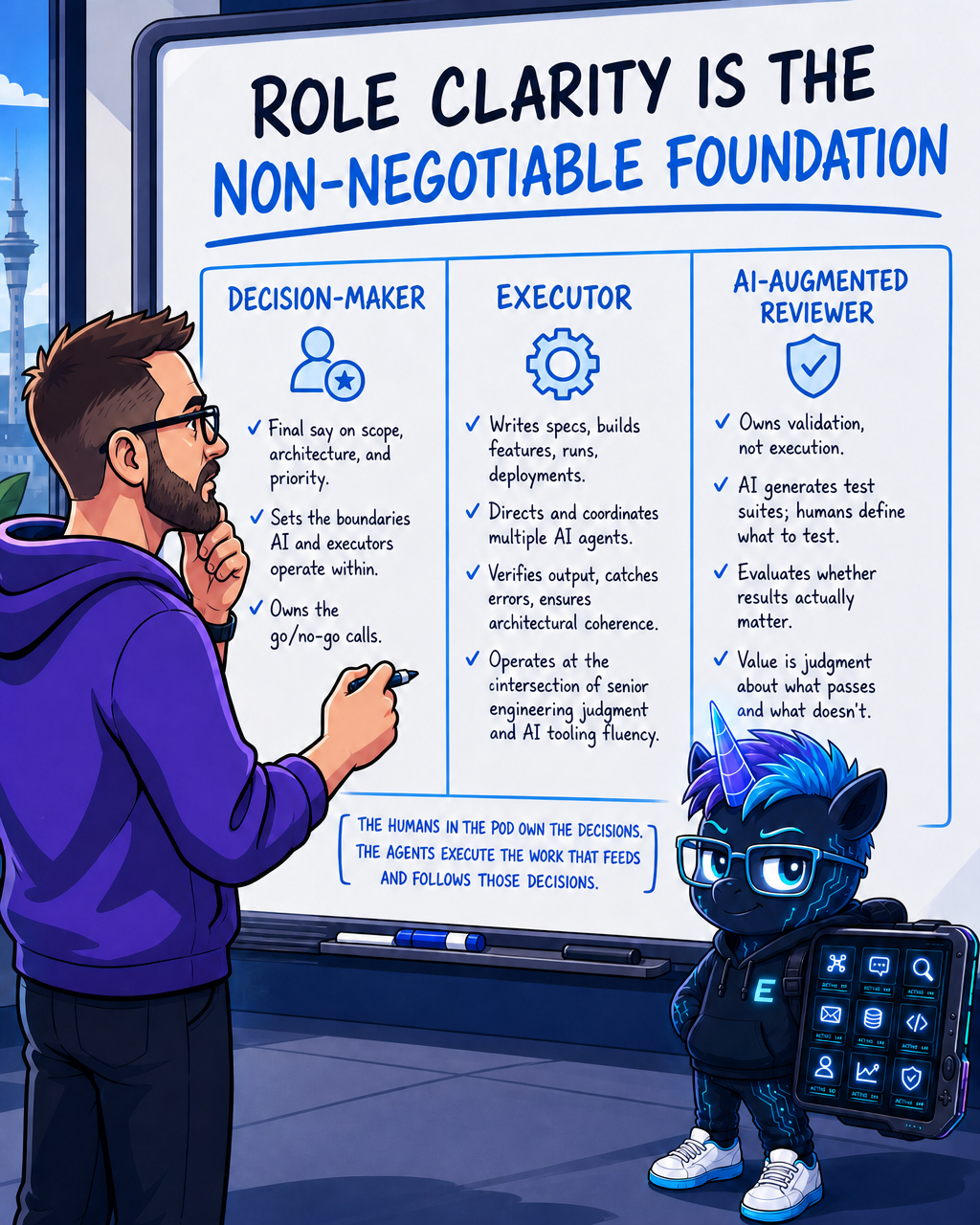
The humans in the pod own the decisions. The agents execute the work that feeds and follows those decisions.
That's the structural principle. In practice, it means three distinct modes of accountability within the team:
Decision-maker. The person with final say on scope, architecture, and priority. They're not in every thread. They set the boundaries AI and executors operate within, and they own the go/no-go calls.
Executor. The person or people doing the work — writing specs, building features, running deployments. In an AI-augmented team, their job has shifted. Rather than writing every line of code, these engineers direct and coordinate multiple AI agents, verify their output, catch errors, and ensure architectural coherence. They operate at the intersection of senior engineering judgment and AI tooling fluency.
AI-augmented reviewer. The person whose job is validation — not execution. Testing is not disappearing, it's becoming more strategic. AI generates test suites; humans define what to test and evaluate whether the results actually matter. The reviewer's value isn't speed. It's judgment about what passes and what doesn't.
Without those three modes being clearly assigned, the team collapses into committee decision-making or defers everything to the decision-maker, both of which kill the pace advantage that makes a microteam worthwhile.
The concrete example: a four-person delivery team
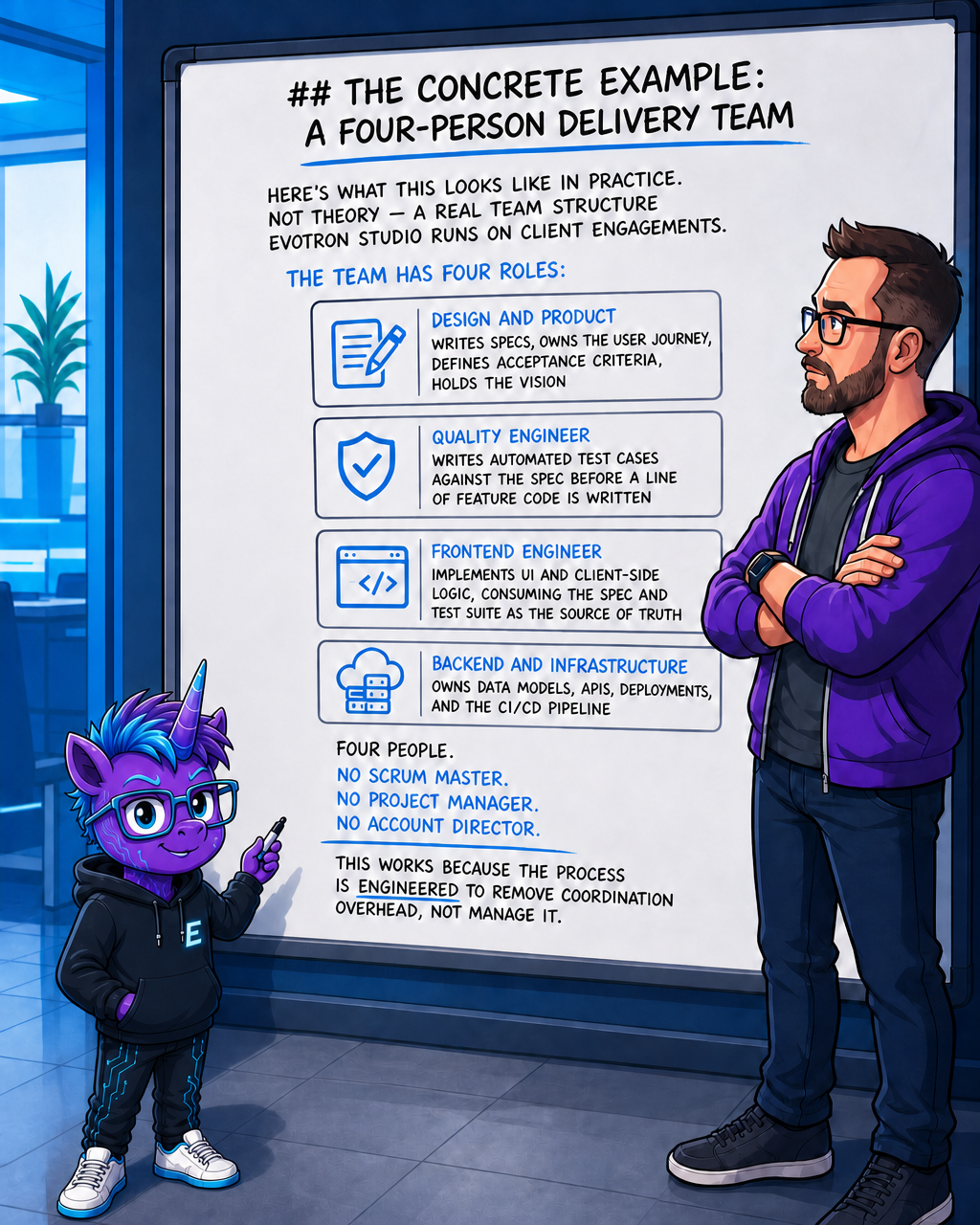
Here's what this looks like in practice. Not theory — a real team structure Evotron Studio runs on client engagements.
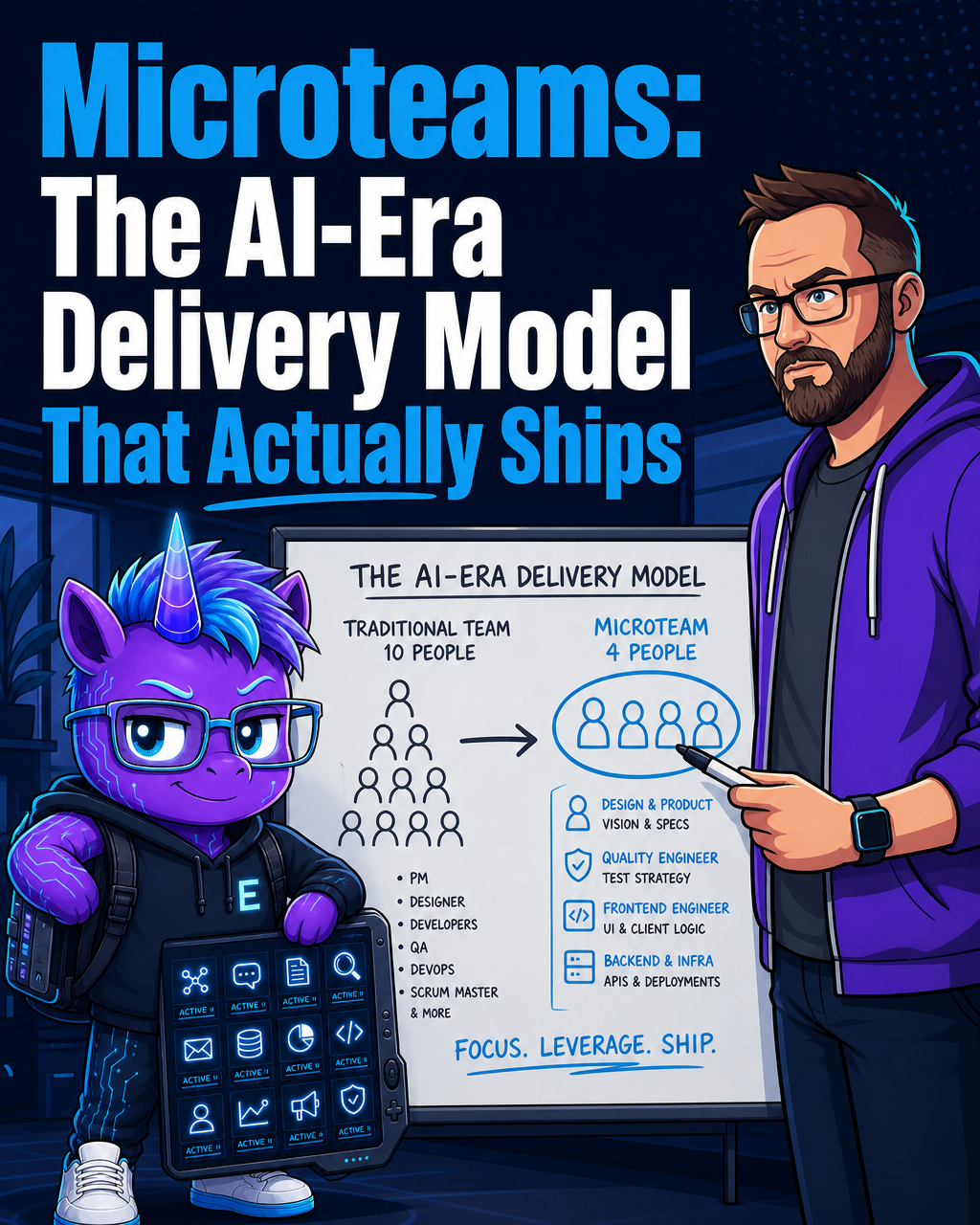
The team has four roles:
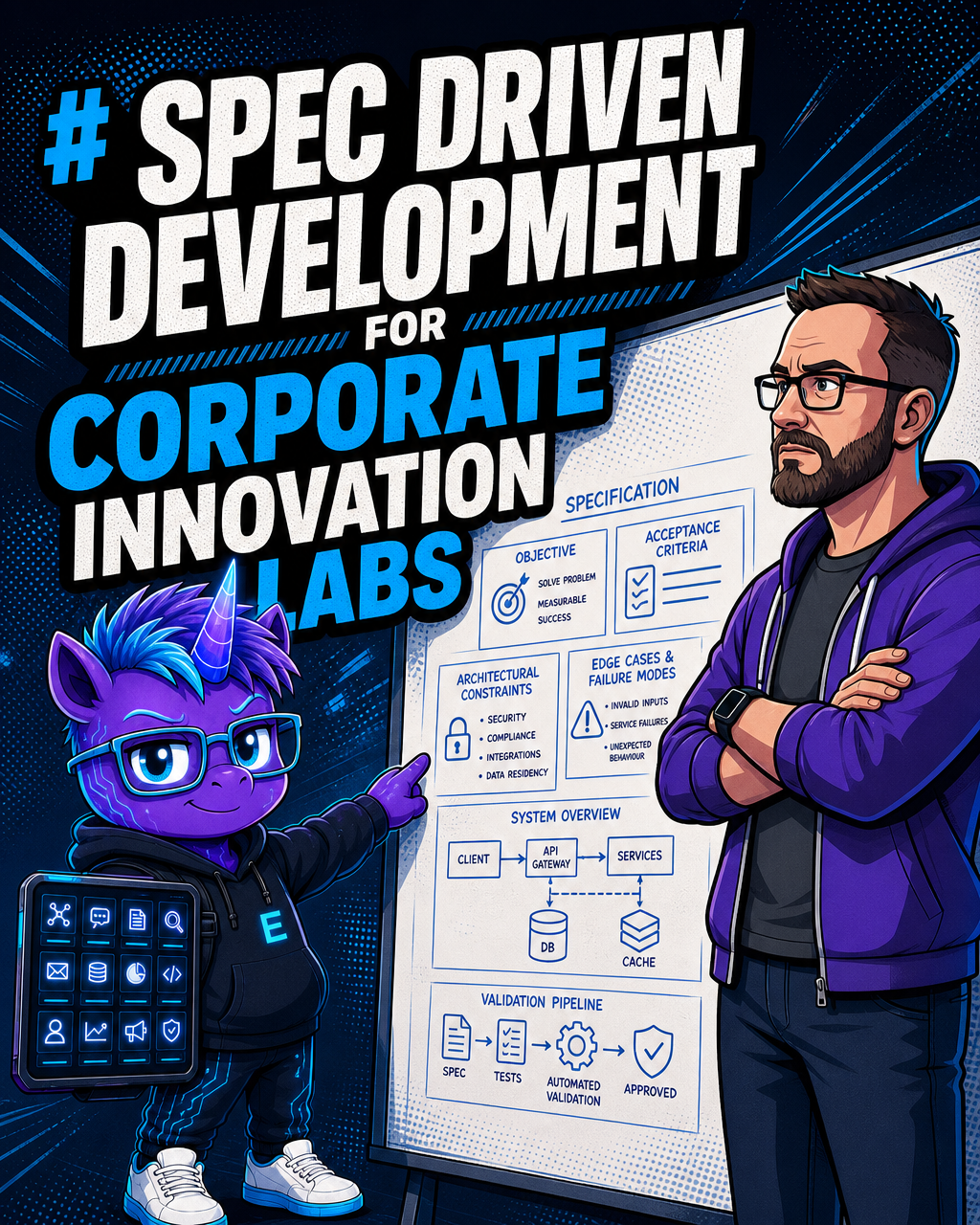
- Design and Product — writes specs, owns the user journey, defines acceptance criteria, holds the vision
- Quality Engineer — writes automated test cases against the spec before a line of feature code is written
- Frontend Engineer — implements UI and client-side logic, consuming the spec and test suite as the source of truth
- Backend and Infrastructure — owns data models, APIs, deployments, and the CI/CD pipeline
Four people. No scrum master. No project manager. No account director.
This works because the process is engineered to remove coordination overhead, not manage it.
The five-stage process
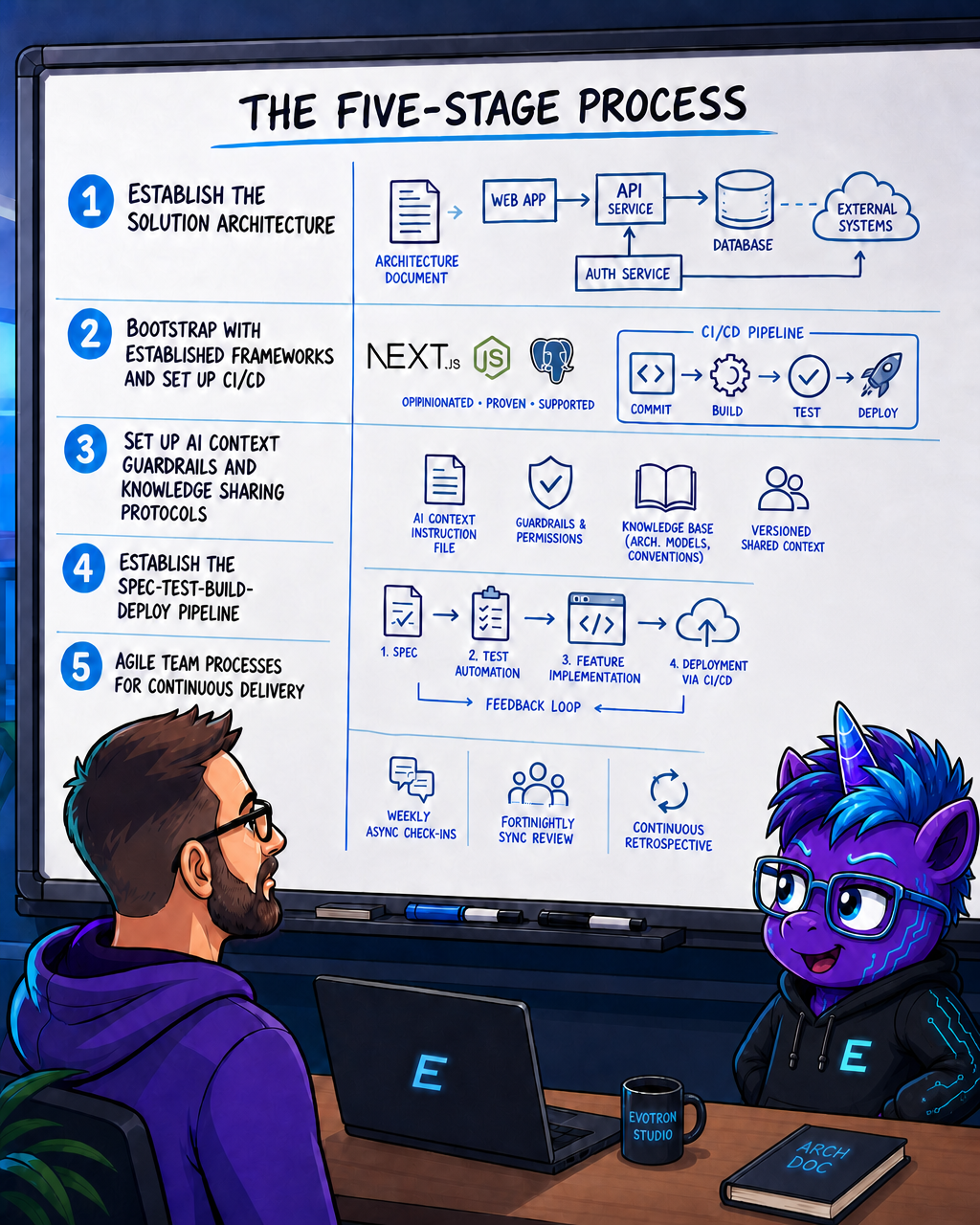
Stage 1: Establish the solution architecture
Before anyone writes a spec or a test, the team spends real time on architecture. This isn't a slide deck exercise. It's a working session that produces documented decisions: which frameworks, which data models, which integration points, which constraints.
The reason this comes first is that AI agents are context-hungry. If you don't define the architectural boundaries upfront, every agent interaction pulls in different directions and you end up with incoherent code that nobody can maintain. The architecture document becomes the first piece of shared context that both humans and AI tools reference throughout the engagement.
Stage 2: Bootstrap with established frameworks and set up CI/CD
Once architecture is signed off, the team bootstraps the project using well-established, opinionated frameworks — the kind that have strong community support, sensible defaults, and predictable AI code generation patterns.
This is deliberate. Novel technology choices are expensive in microteams because there's no one to absorb the learning curve. Senior people pick boring, proven stacks so they can focus their judgment on the problem, not the plumbing.
CI/CD goes in on day one. Not week three. Every commit runs through the pipeline from the start. Organisational productivity improves only when process bottlenecks — review, QA, security, integration — are also addressed. If you wait to set up the pipeline until you have something to deploy, you've already broken the feedback loop that makes continuous delivery possible.
Stage 3: Set up AI context guardrails and knowledge sharing protocols
This is the stage most teams skip, and it's where a lot of microteam experiments fall apart.
AI agents are only as useful as the context you give them. A model that doesn't know your data schema, your naming conventions, your compliance constraints, or your architectural decisions will generate code that looks fine and integrates badly.
The DORA team at Google Cloud has consistently argued, across multiple State of DevOps reports, that the greatest returns on AI investment come not from the tools themselves but from the strength of the underlying organisational system — the quality of the internal platform, the clarity of workflows, and the alignment of teams. The implication is that without this foundation, AI tends to create localised pockets of productivity that don't compound at the delivery level.
In practical terms, this means building a shared context layer: a project-specific AI instruction file or system prompt that references the architecture document, the data models, the naming conventions, and the compliance requirements. It means deciding which tasks AI agents are permitted to execute autonomously versus which require human sign-off. And it means making those decisions explicit, documented, and versioned — not assumed.
DORA research has identified foundational capabilities that determine success in AI-augmented teams: strong version control practices, working in small batches, quality platform infrastructure, accessible and well-structured data, and a user-centric focus. Teams with these foundations in place are better positioned to realise sustained productivity gains.
Stage 4: Establish the spec-test-build-deploy pipeline
This is the heartbeat of the microteam's delivery process. Every feature follows the same sequence:
-
Spec — Design and Product writes a clear, structured feature spec with acceptance criteria. Not a vague user story. A document that a QA engineer can write tests against and a developer can implement without a meeting.
-
Test automation — Quality Engineer writes the automated test cases before implementation starts. This is test-driven development at the team level. It forces the spec to be precise and gives the build stage a clear definition of done.
-
Feature implementation — Frontend and Backend engineers build against the spec and the test suite. AI agents handle scaffolding, boilerplate, and pattern repetition. Senior engineers handle judgment calls, integration logic, and anything that requires architectural awareness.
-
Deployment via CI/CD — The pipeline runs on every commit. Tests run. If they pass, the build deploys to a staging environment automatically. If they fail, the commit is flagged before it touches the next environment.
What this pipeline does is remove the handoff meeting. Context in distributed teams rarely fails because no one communicated — it fails because the communication is scattered: a decision in a meeting, a clarification in chat, an update in a doc, and the actual work on a board. The spec-test-build-deploy sequence gives everything a single source of truth. Decisions live in the spec. Tests encode the acceptance criteria. The pipeline enforces quality without a person having to chase it.
Stage 5: Agile team processes for continuous delivery
The four-person team doesn't run two-week sprints with planning poker and retrospectives that take half a day. That overhead was designed for larger teams that needed coordination rituals to stay aligned. A microteam with a clear spec pipeline doesn't have that coordination problem.
What it does run:
- Weekly async check-ins — written, not a video call. What shipped, what's blocked, what's next.
- Fortnightly sync review — the one real-time meeting. Demo what shipped. Decide what's next. Review any architectural decisions that need group judgment.
- Continuous retrospective — not a scheduled event. A living document where anyone can add a note about what's working or what isn't, reviewed at the fortnightly sync.
Effective collaboration in distributed teams tends to combine both sync and async modes — sync for decisions and relationship-building, and async for updates, handoffs, and documented rationale.
Deployment decisions follow the same logic. Small batches, shipped often. DORA research has found that working in small batches is associated with improved delivery performance and reduced deployment friction — a finding that holds, and may be amplified, in AI-augmented delivery contexts. Don't wait for the big release. Ship the feature. Get feedback. Adjust.
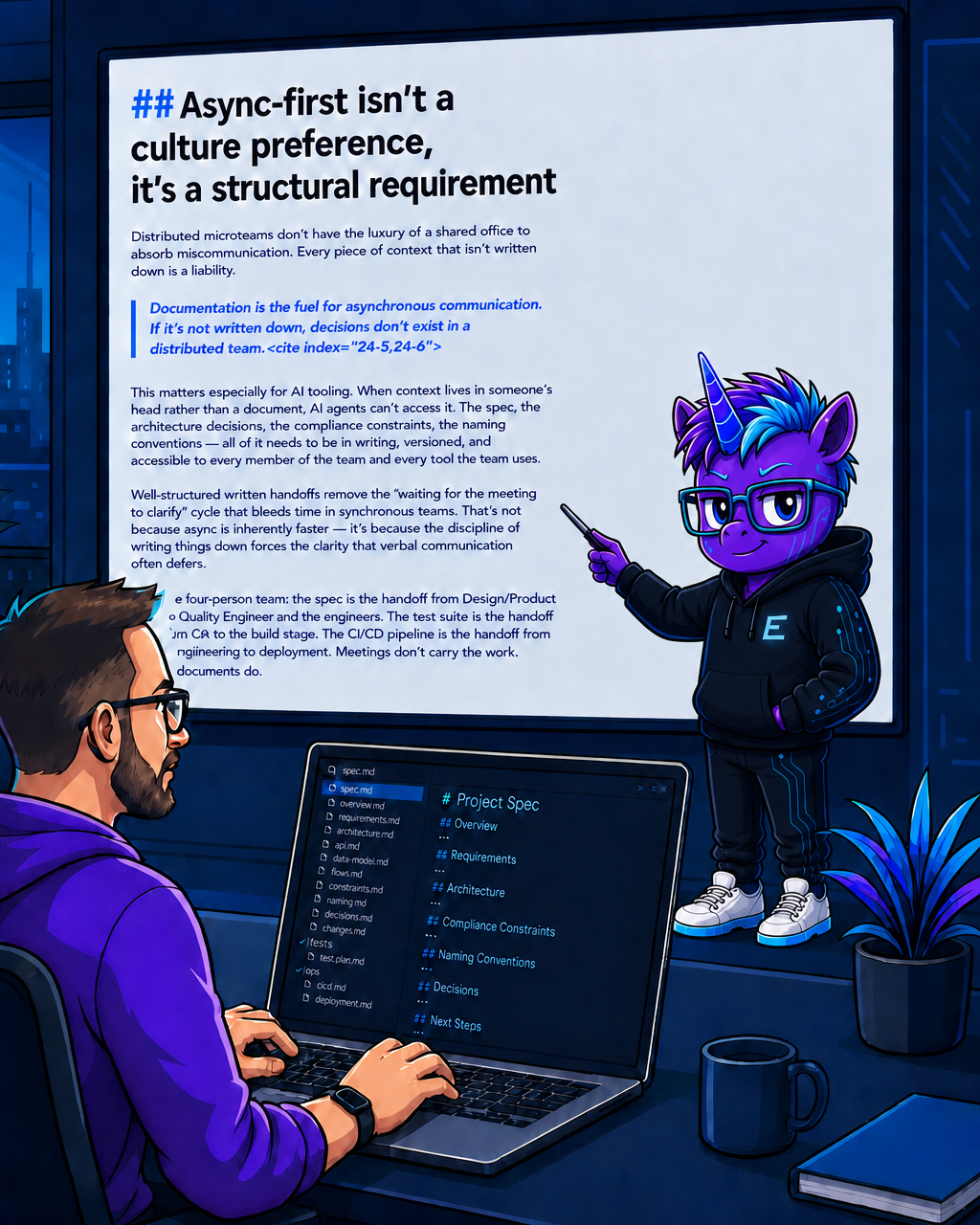
Async-first isn't a culture preference, it's a structural requirement
Distributed microteams don't have the luxury of a shared office to absorb miscommunication. Every piece of context that isn't written down is a liability.
Documentation is the fuel for asynchronous communication. If it's not written down, decisions don't exist in a distributed team.
This matters especially for AI tooling. When context lives in someone's head rather than a document, AI agents can't access it. The spec, the architecture decisions, the compliance constraints, the naming conventions — all of it needs to be in writing, versioned, and accessible to every member of the team and every tool the team uses.
Well-structured written handoffs remove the "waiting for the meeting to clarify" cycle that bleeds time in synchronous teams. That's not because async is inherently faster — it's because the discipline of writing things down forces the clarity that verbal communication often defers.
For the four-person team: the spec is the handoff from Design/Product to Quality Engineer and the engineers. The test suite is the handoff from QA to the build stage. The CI/CD pipeline is the handoff from engineering to deployment. Meetings don't carry the work. Documents do.
Measuring what actually matters
Velocity points don't mean much when an AI agent can generate a thousand lines of scaffolding in four minutes. The old metrics don't map cleanly onto how a microteam works.
In practice, AI often increases the volume and speed of code production, but without the appropriate engineering discipline, these gains may not translate into improved software delivery performance. This dynamic leads to one of the report's most important conclusions: AI amplifies the quality of the engineering system it operates within.
For a microteam, the metrics that matter are outcome-based:
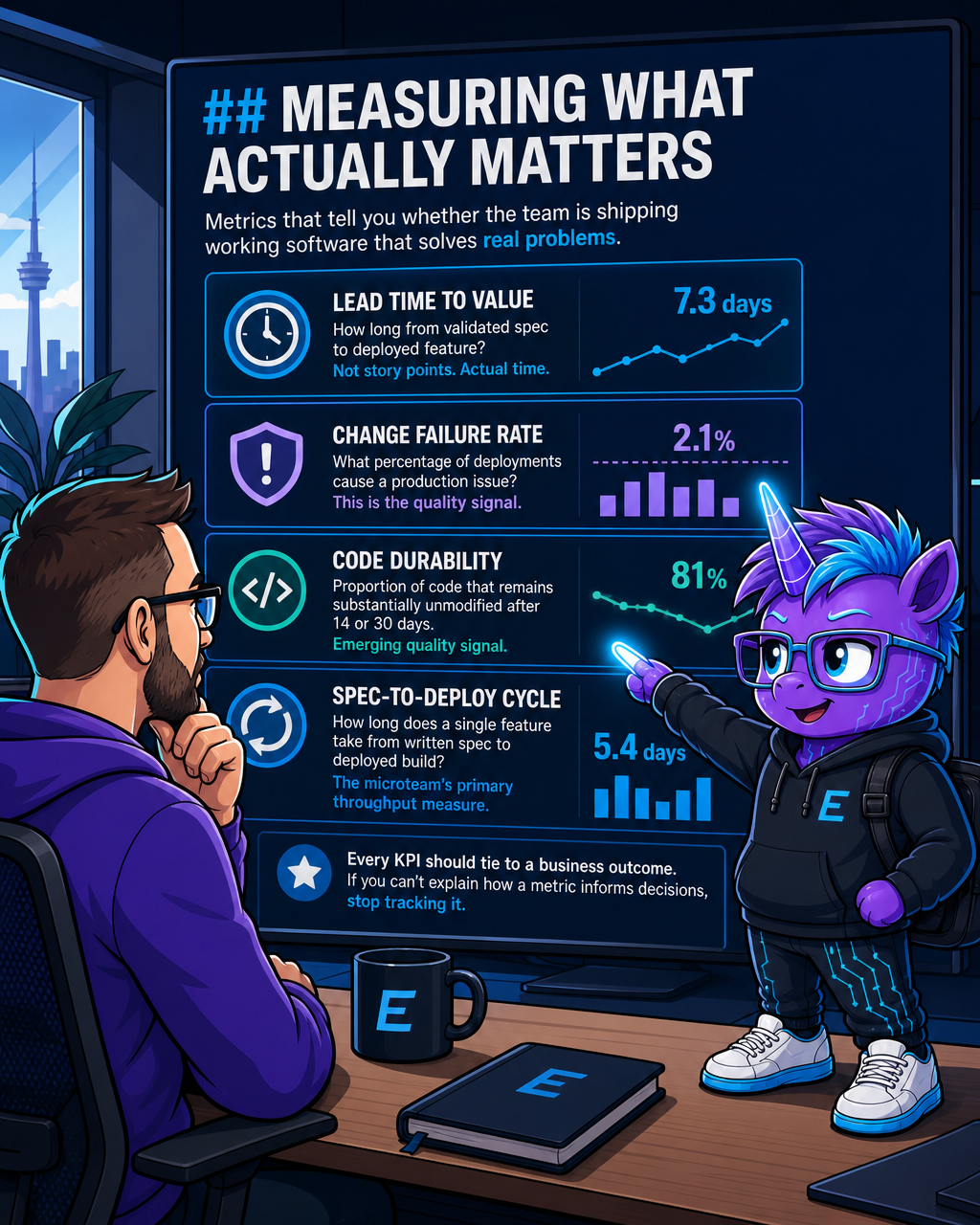
- Lead time to value — how long from validated spec to deployed feature? Not story points. Actual time.
- Change failure rate — what percentage of deployments cause a production issue? This is the quality signal. If it's rising as AI code generation increases, your review and test processes aren't keeping pace.
- Code durability — the proportion of code that remains substantially unmodified after 14 or 30 days is an emerging quality signal worth tracking when AI significantly increases code volume. It is not yet a standardised industry metric, but it offers a useful proxy for whether generated code is holding up in production.
- Spec-to-deploy cycle — how long does a single feature take from written spec to deployed build? This is the microteam's primary throughput measure.
Every KPI should tie to a business outcome. If you can't explain how a metric informs decisions, stop tracking it.
Spend time on metrics that tell you whether the team is shipping working software that solves real problems. Not metrics that tell you whether individual developers look busy.
Governance doesn't disappear in a microteam, it gets personal
Small teams don't have the diffusion of responsibility that large teams have. When four people own a product, everyone knows who made which decision. That's accountability by default.
But governance still needs structure. A few things that matter:
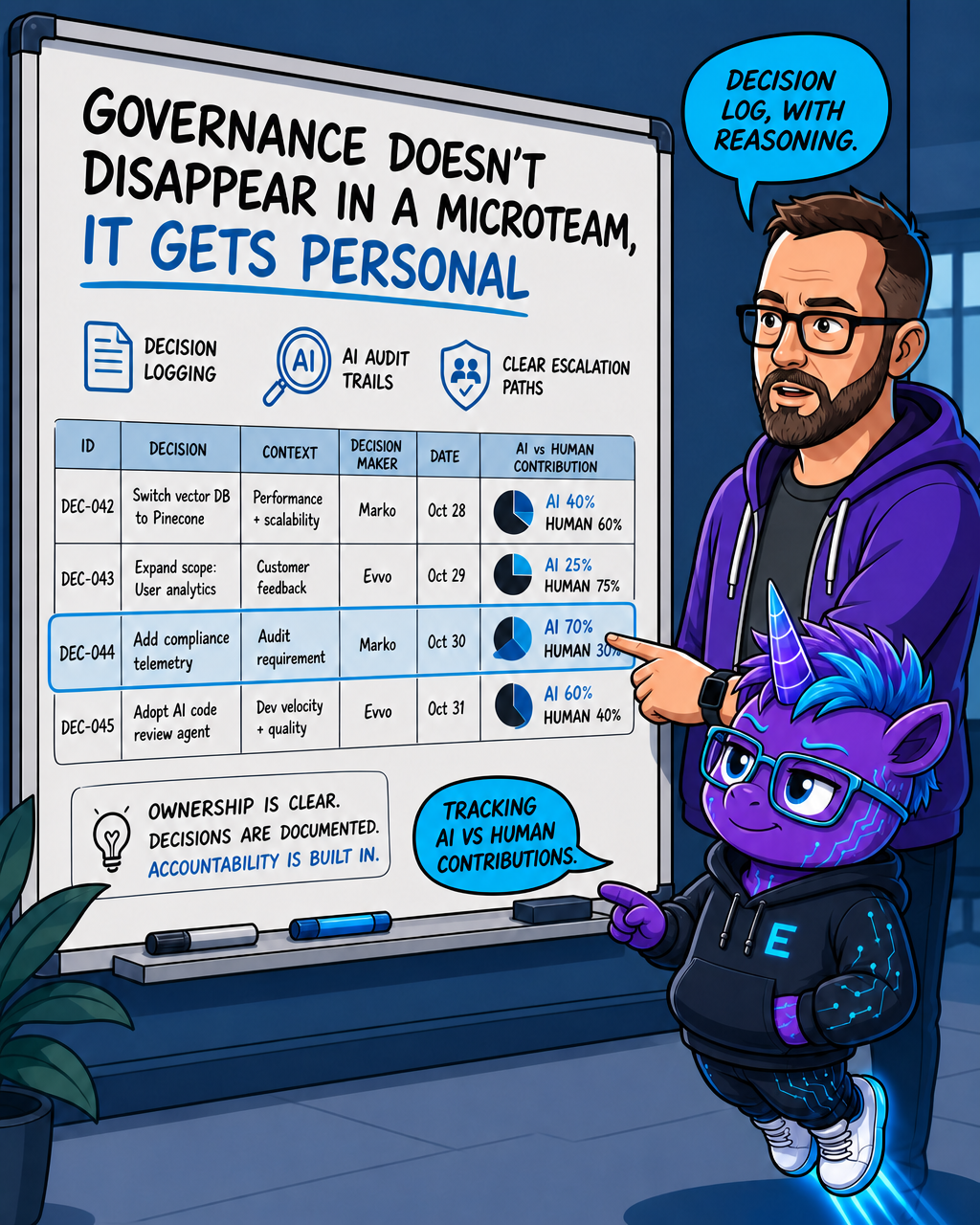
Decision logging. Architectural decisions, scope changes, compliance choices — all written down with the reasoning, not just the outcome. When the team is small, institutional memory is fragile. If the backend engineer leaves, that reasoning needs to exist somewhere that isn't their head.
AI audit trails. AI-era teams need AI-specific observability in addition to traditional delivery metrics. Useful measures include AI adoption rates across tools, code-level AI versus human contribution analysis, and longitudinal outcome tracking for AI-touched code such as 30-day incident rates. Knowing which code was AI-generated versus human-authored matters for quality tracking, compliance conversations, and technical debt management.
Clear escalation paths. In a microteam, the decision-maker role can't be ambiguous. There has to be one person who makes the call when the team is split. Not a committee. One person with accountability and the context to use it.
Industry surveys consistently find significant scepticism among enterprise leaders about AI agents acting fully autonomously — a caution that is reasonable given where the technology currently sits. The answer isn't to limit AI adoption. It's to structure the human layer around it so that every AI action has a clear owner.
The honest trade-off
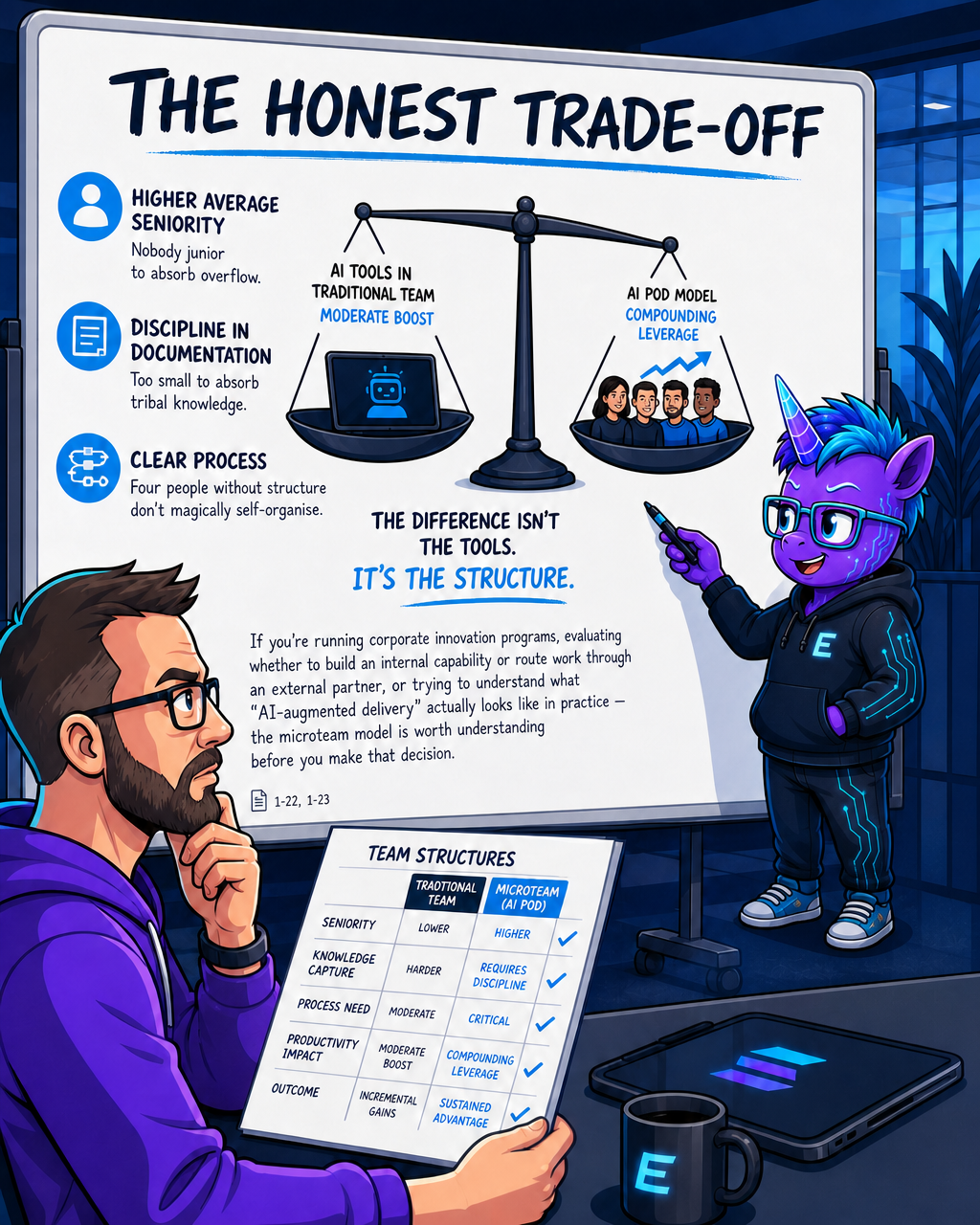
Microteams are not a silver bullet. They require a higher average seniority than traditional teams, because there's nobody junior to absorb the overflow. They require discipline in documentation, because the team is too small to absorb the cost of tribal knowledge. And they require a clear process, because four people without structure don't magically self-organise.
A team using AI tools inside a traditional structure will get a moderate productivity boost. A team restructured around an AI pod model gets compounding leverage — faster delivery, more consistent quality, and a knowledge base that gets smarter over each project cycle.
The difference isn't the tools. It's the structure.
If you're running corporate innovation programs, evaluating whether to build an internal capability or route work through an external partner, or trying to understand what "AI-augmented delivery" actually looks like in practice — the microteam model is worth understanding before you make that decision.
What this looks like at Evotron Studio
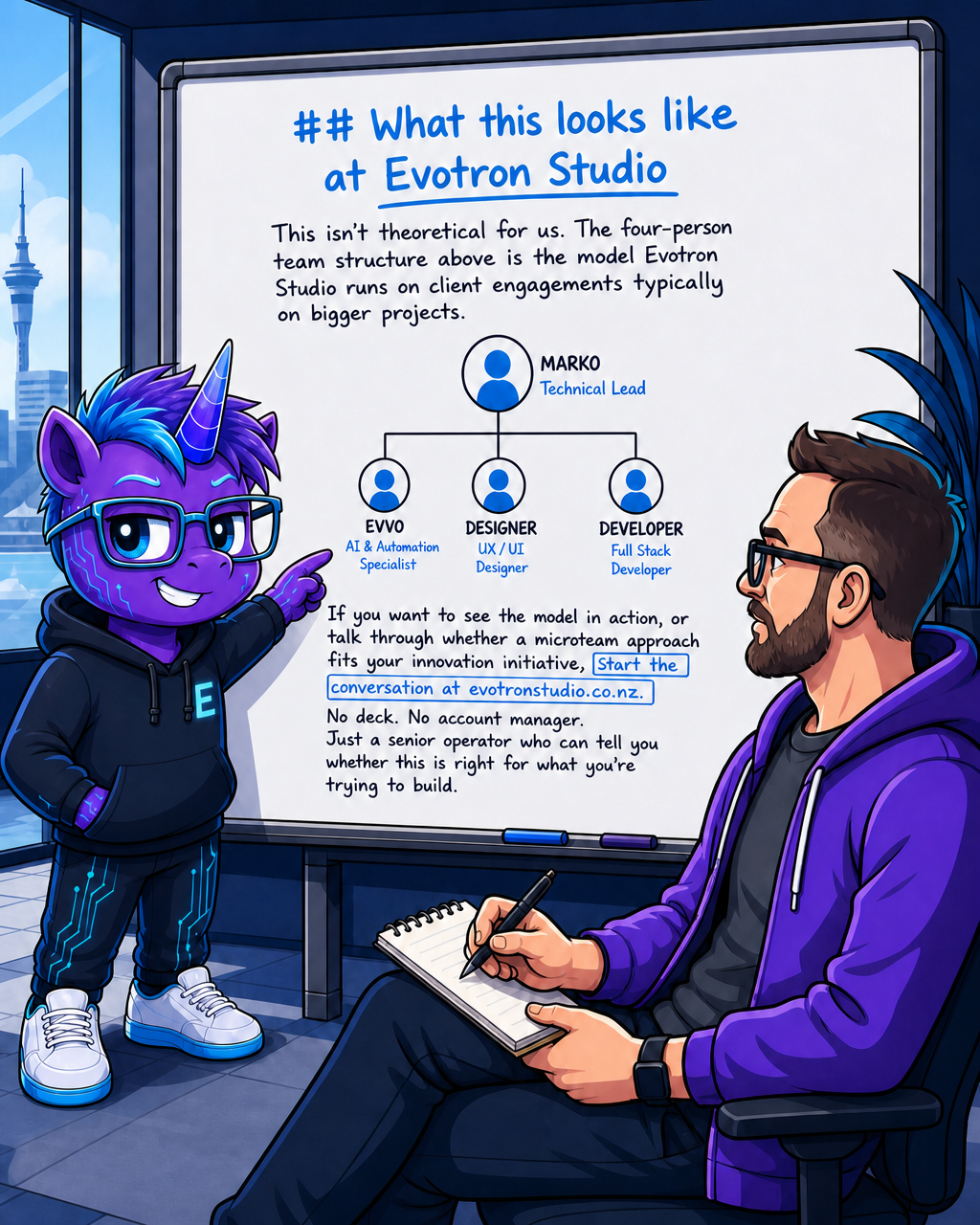
This isn't theoretical for us. The four-person team structure above is the model Evotron Studio runs on client engagements typically on bigger projects.
If you want to see the model in action, or talk through whether a microteam approach fits your innovation initiative, start the conversation at evotronstudio.co.nz. No deck. No account manager. Just a senior operator who can tell you whether this is right for what you're trying to build.
Related reading

Evotron Studio
We build and run our own AI-amplified ventures — and bring the same capability into yours.
We build and run our own AI-amplified ventures — and bring the same capability into yours.
Learn more about Evotron Studio and get started today.
Visit Evotron Studio