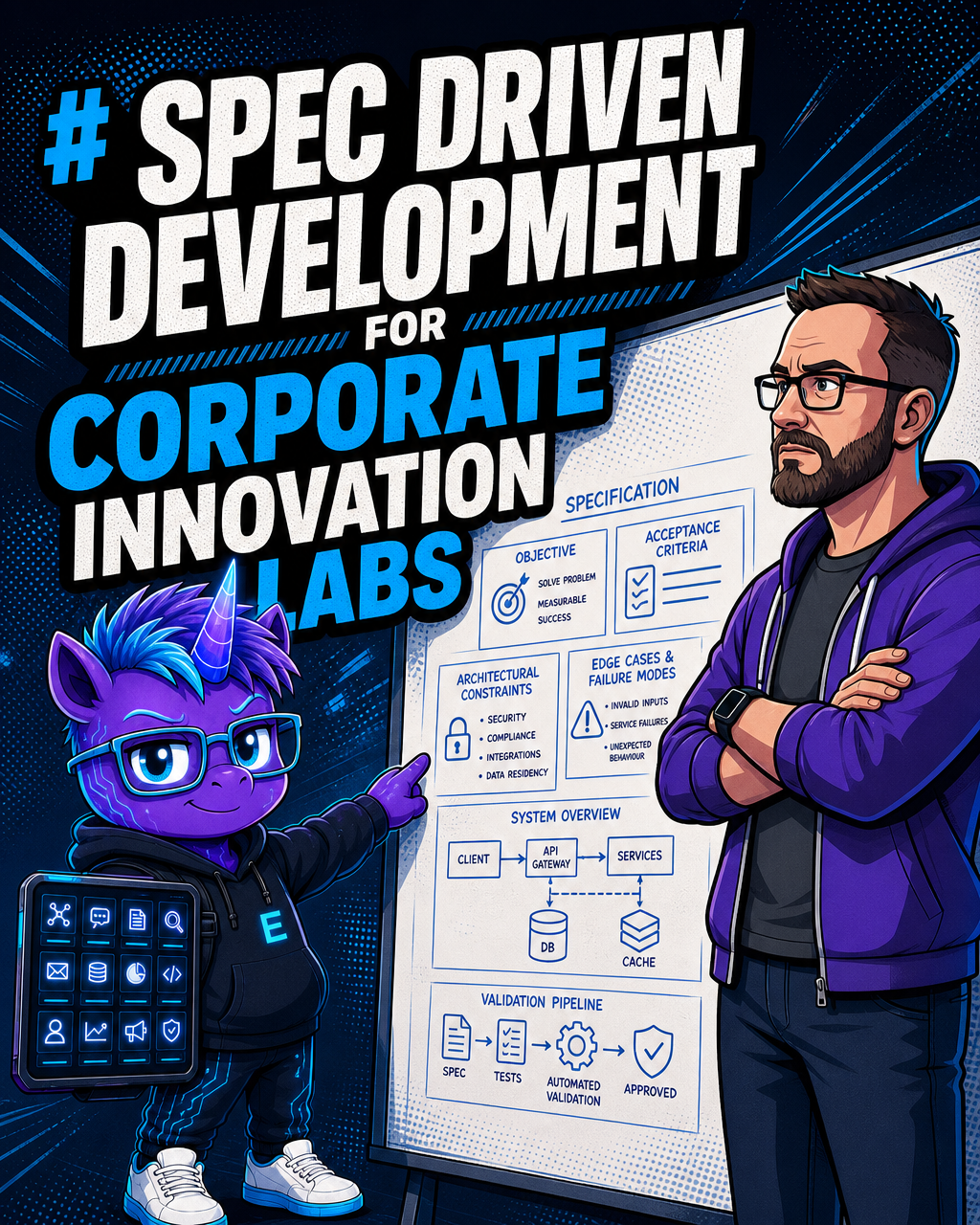
What a Senior Kiwi Operator Actually Does (vs. What You Think You're Hiring)

Most founders who come to us have already had one bad experience. They hired an agency. Or they hired a freelancer. Or they started building a team. At some point, someone with a nice Gantt chart showed up and called themselves a senior operator.
They weren't.
Here's what the difference actually looks like, and why it matters a lot more than you'd think when it's your capital on the line.
What a project manager does (and why it's not what you need)
A project manager coordinates. They schedule. They write the update emails and track the RAG status and escalate decisions upward. When something breaks, they find out who owns it. When a call goes sideways, they debrief and document.
They don't decide. They don't ship. And if they've never personally taken a product from zero to live revenue, they can't tell you whether the direction you're heading is the right one. They can tell you whether you're on schedule.
A senior operator is different in one specific way: they've shipped. In NZ. In a regulated market. Under actual constraints. They know what the FMA expects — within the specific regulatory domains they've built for — because they've built for it before. They know what "compliance from sprint one" means in practice, not in a deck. They can sit in a room with you, look at your product concept, and tell you what's wrong with the architecture before a line of code is written.
Accountability is personal. The person you're talking to is the person doing the work. Not an account manager fronting a team of juniors. Not a partner who joins the kick-off call and disappears for six months. One senior person, personally accountable, no escalation chain.
What's changed in 2026: the agentic force multiplier is real
This is worth being honest about, because there's a lot of hype around AI and most of it is noise.
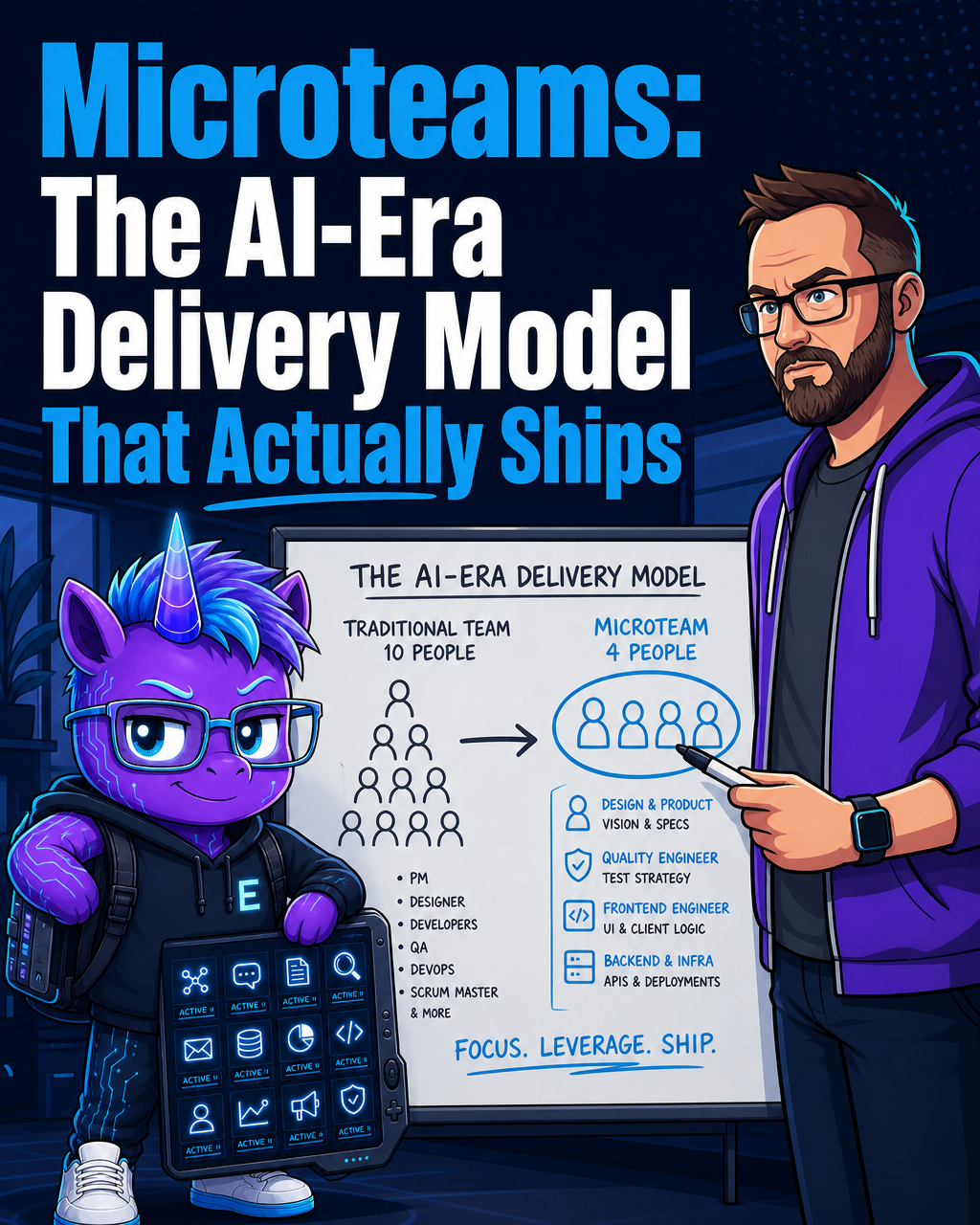
The substantive shift is this: in 2026, a skilled operator running an agentic platform can do work that used to require a much larger team. Not because the AI is magic, but because bounded, well-defined tasks across product, GTM, content, research, and compliance workflows can now be completed by agents with real output, not demos. The human role shifts from execution to orchestration and quality control.
In our own experience building on this stack, the output relative to fully burdened human headcount on equivalent scoped work is material. That's our observation from production, not a generalised claim.
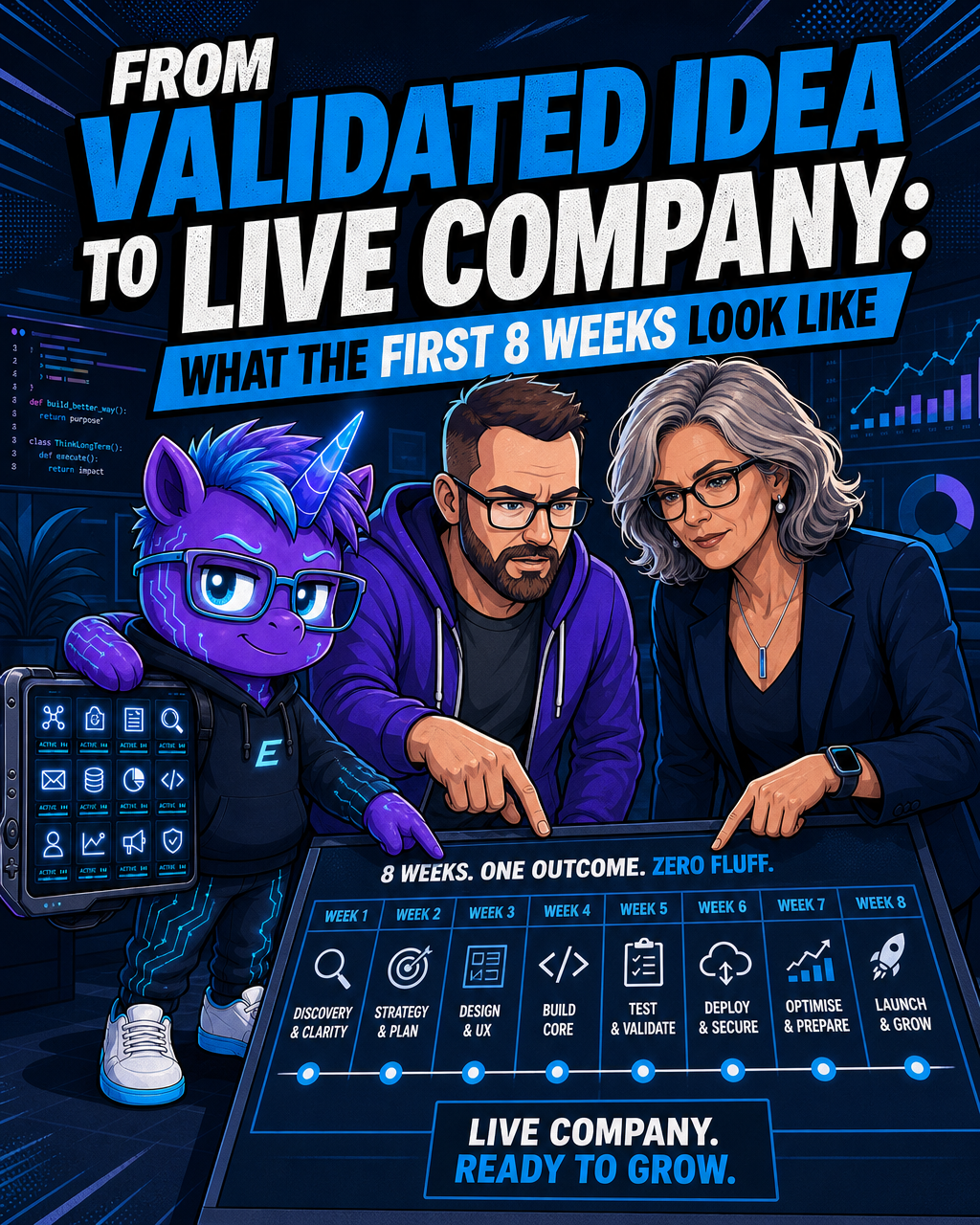
For founders, what this means is practical: one senior Kiwi operator backed by Supramono, our own agentic platform, can deliver what used to need a significantly larger team — based on our experience across specific engagement types, not as a universal rule. Product specs, brand identity, landing pages, outbound sequences, compliance frameworks, investor materials. For a standard early-stage SaaS or fintech product, not in months — in weeks. Scope, complexity, and regulatory environment will affect timelines, particularly for heavily regulated activities. The constraint isn't the platform. It's whether the person behind the wheel knows what good looks like.
That's the part that can't be automated.
Why milestones replace retainers (and why that protects you)
Here's the agency model, plainly: you sign a retainer, work begins, invoices arrive monthly, and the relationship continues until someone decides to end it. There's no structural pressure on the agency to hit a gate. The billing continues regardless.
The milestone model works differently. No milestone, no next tranche. Every engagement has explicit go/no-go decision points tied to deliverables, not to time elapsed. If we don't hit the gate, the money doesn't move.
That's not just how we protect founder capital. It's how we stay honest with ourselves. When your own platform is on the line, you don't let a sprint slide.
For founders leaving a corporate role, or deploying personal capital from a settlement or savings, this matters enormously. You're not signing up for an open-ended experiment. You're buying a structured sprint with a defined outcome, and you retain the ability to stop at any gate if the direction isn't right.
Receipts, not case studies
Every agency in NZ has case studies. Nicely laid out, client logos, outcome statements. You can't verify most of them. You can't click on them. You don't know who actually did the work.
We built Supramono. It's live. You can use it. We also built additional products using the same method — publicly accessible and linked from our site. Every claim we make about our agentic platform links to a product we actually run.
That matters for one reason: the same stack we used to build those products is what we'd use to build yours. We're not selling you a methodology we learned about at a conference. We're selling you a repeatable operating method we use on our own ventures, every day.
Many NZ agencies cannot point to a live SaaS product built with their own method — and that's worth asking about when you're evaluating anyone in this space. We can. That's the proof of method.
The graduate-to-self-serve path: why it matters for your cap table story
Most agency relationships end at handover. You get the assets. You say thank you. You scramble to figure out how to run what they built.
Our engagements are designed to end with you not needing us anymore.
Typically between month three and six — depending on venture complexity and founder readiness — you move onto Supramono and operate your venture independently. We hand you a working product, a live GTM stack, and the ability to drive the same platform we used to build it. The studio relationship becomes a SaaS subscription, not a retainer dependency. Timelines vary; the goal is your operational independence, not a fixed handover date.
This matters for investor conversations too. When a NZ angel or early-stage fund reviewer asks how you're going to run the company after the seed round, "I'm operating the same agentic platform the studio used to build it" is a clean answer. It shows operational independence. It shows you understand the tools. It shows you're not carrying an ongoing agency cost that eats margin before you've earned it.
The graduate path isn't a feature we bolted on. It's the entire point. We're not trying to hold your venture hostage. We're trying to make it launchable by you.
What to actually ask before you hire anyone
Whether it's us or someone else, here are the questions worth asking — they apply to any operator or studio model, including ours:
- Can they show me a live product they personally shipped in the NZ market?
- Will the person I'm meeting be the person doing the work, or does this get handed off?
- What decisions can they make without escalating, and what decisions require me to be involved?
- How does the engagement end, and what do I own at the end of it?
- Is there a clear milestone structure, or is this an open-ended retainer?
A studio model like ours works well for domain-expert founders who want to move fast with a small, senior team and own the platform they launch on. It may not be the right fit if you need a large multidisciplinary team under one roof, prefer a more hands-on collaborative agency dynamic, or are building outside the scope of what a lean operator-led model can cover. Ask those questions honestly — of us and of anyone else you're evaluating.
If the answers are vague, that's your answer.
Evotron Studio is an agentic venture studio for early-stage founders in New Zealand and ANZ. We pair one senior Kiwi operator with our own platform, Supramono, to stand up your product, brand, and go-to-market in weeks, not months. No juniors. No open-ended retainers. Live receipts you can click on.
If you're a domain-expert founder with a real problem and available capital, start with our Diagnostic at evotronstudio.co.nz. One week. Clear go/no-go. Scoped proposal if it makes sense to proceed.
Related reading
Evotron Studio
We build and run our own AI-amplified ventures — and bring the same capability into yours.
We build and run our own AI-amplified ventures — and bring the same capability into yours.
Learn more about Evotron Studio and get started today.
Visit Evotron Studio