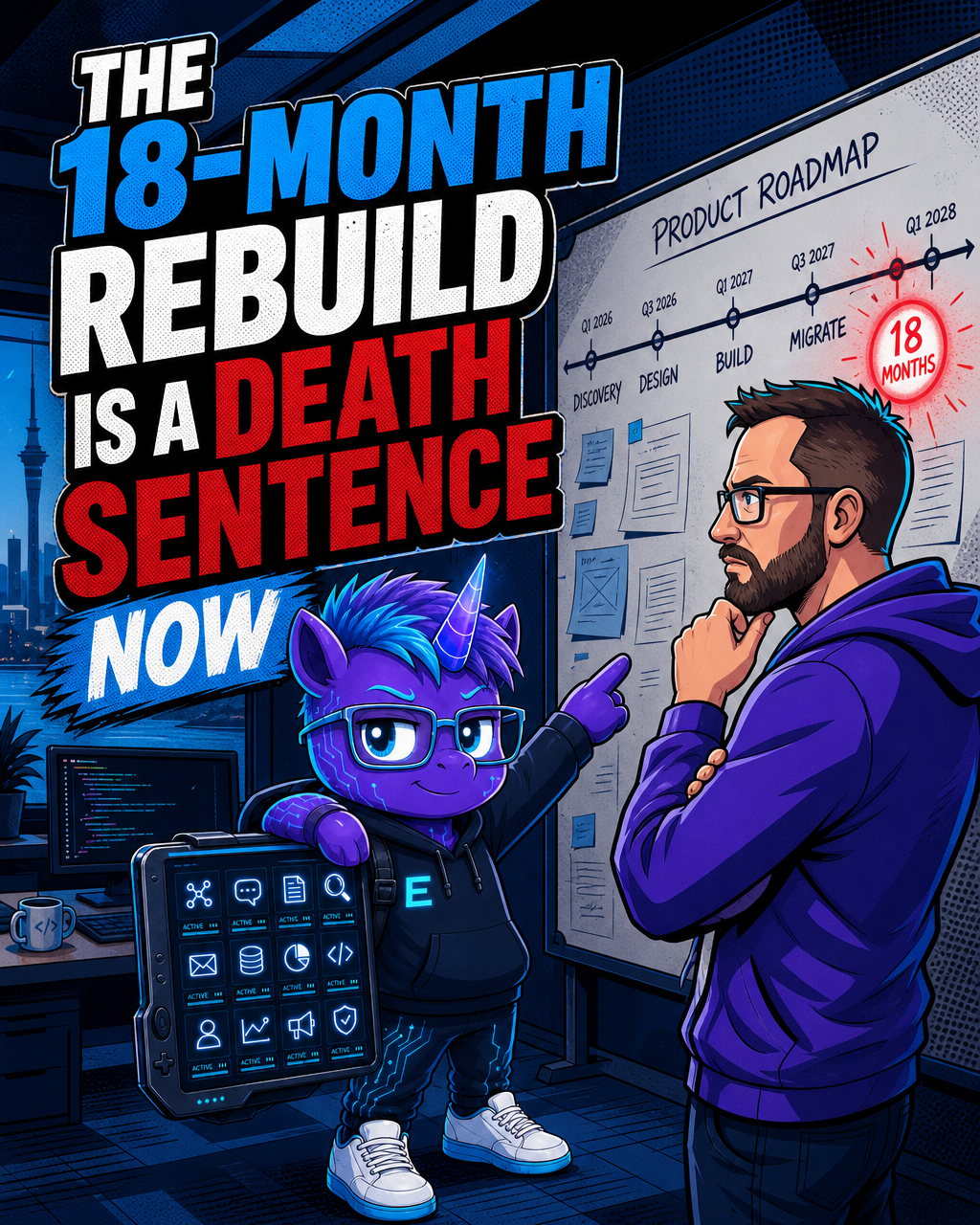
Why NZ Domain Experts Keep Stalling Before They Start


Why NZ Domain Experts Keep Stalling Before They Start
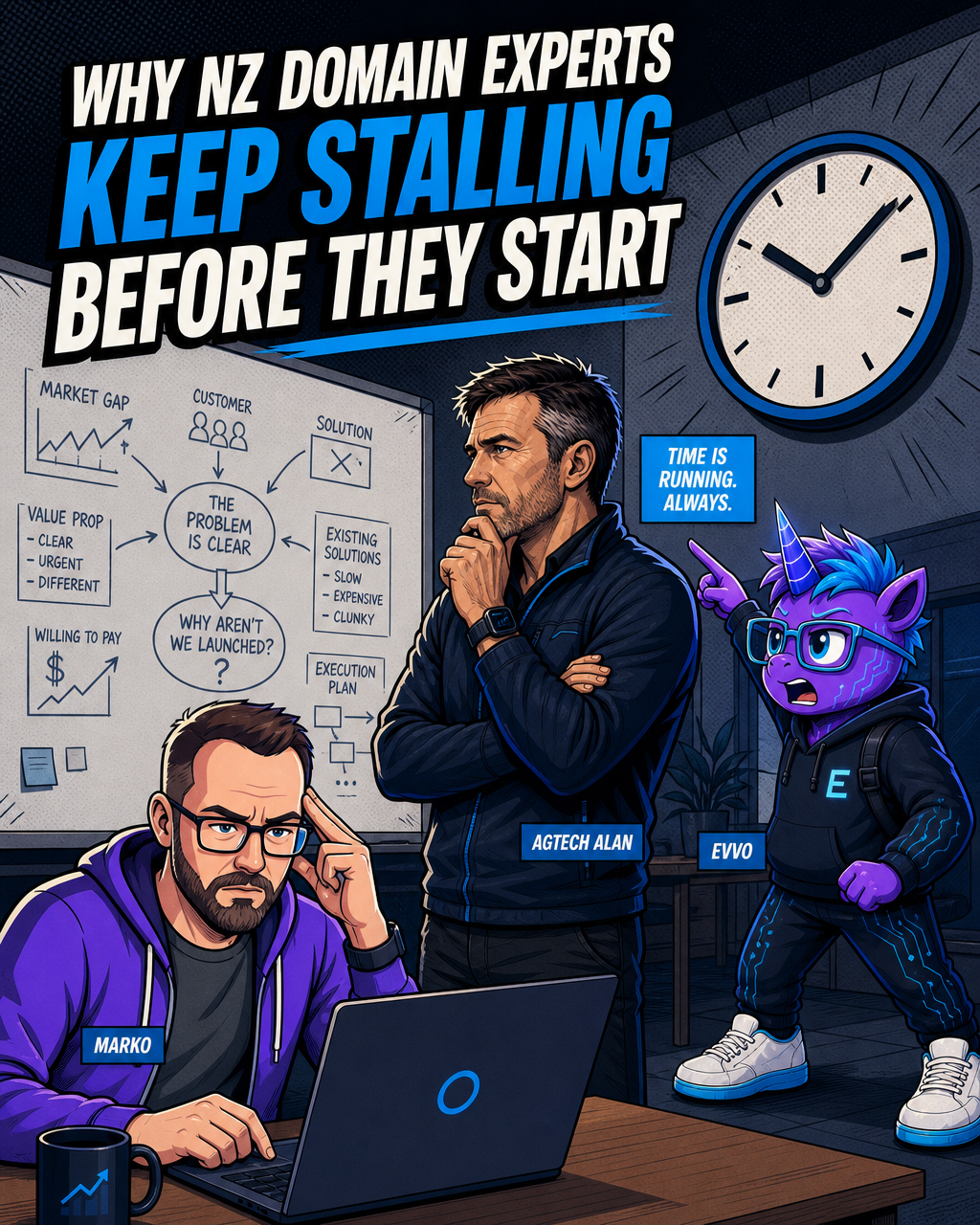
You know the problem better than anyone. You've spent fifteen years in wholesale banking, or a decade running clinical services, or years deep inside primary sector research. You can see the gap in the market with painful clarity. You know who the customer is, what they're willing to pay, and exactly why every existing solution misses the mark.
So why hasn't your company launched yet?
It's not a knowledge problem. It's an execution problem. And in New Zealand in 2026, that execution gap has never been wider or more expensive to sit in.
The market opportunity is real. The execution gap is enormous.
NZ's fintech sector has been among the fastest-growing parts of the technology industry in the country, and industry observers consistently point to sustained momentum heading into the late 2020s. That's not a niche opportunity. That's a generational one.
Agtech and healthtech are moving in the same direction. Regulatory change, open banking — where NZ's Consumer Data Right framework is progressing through implementation, though rollout has been more gradual than in Australia — and the arrival of real AI capability in production environments means 2026 is genuinely different from 2022. The window to build in these verticals is open.
But the window being open doesn't help you if you can't get the build started.
The hiring math is brutal
The first instinct for most domain-expert founders is to hire. Find a senior developer. Get a CTO. Build a small team and get moving.
Here's what that actually looks like in NZ right now.
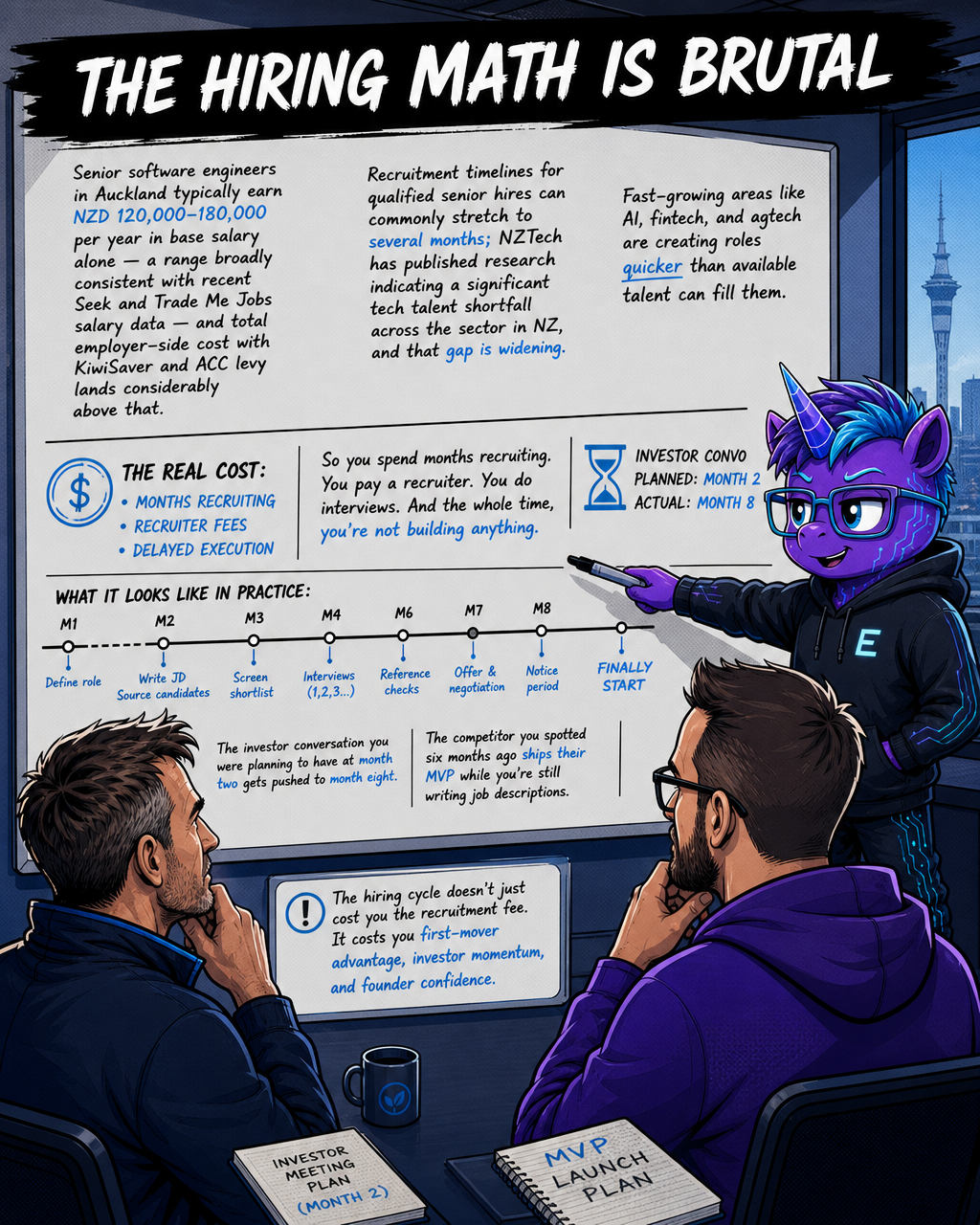
Senior software engineers in Auckland typically earn NZD 120,000–180,000 per year in base salary alone — a range broadly consistent with recent Seek and Trade Me Jobs salary data — and total employer-side cost with KiwiSaver and ACC levy lands considerably above that. Recruitment timelines for qualified senior hires can commonly stretch to several months; NZTech has published research indicating a significant tech talent shortfall across the sector in NZ, and that gap is widening. Fast-growing areas like AI, fintech, and agtech are creating roles quicker than available talent can fill them.
So you spend months recruiting. You pay a recruiter. You do interviews. And the whole time, you're not building anything. The investor conversation you were planning to have at month two gets pushed to month eight. The competitor you spotted six months ago ships their MVP while you're still writing job descriptions.
The hiring cycle doesn't just cost you the recruitment fee. It costs you first-mover advantage, investor momentum, and founder confidence.
Agencies deliver assets. Not companies.
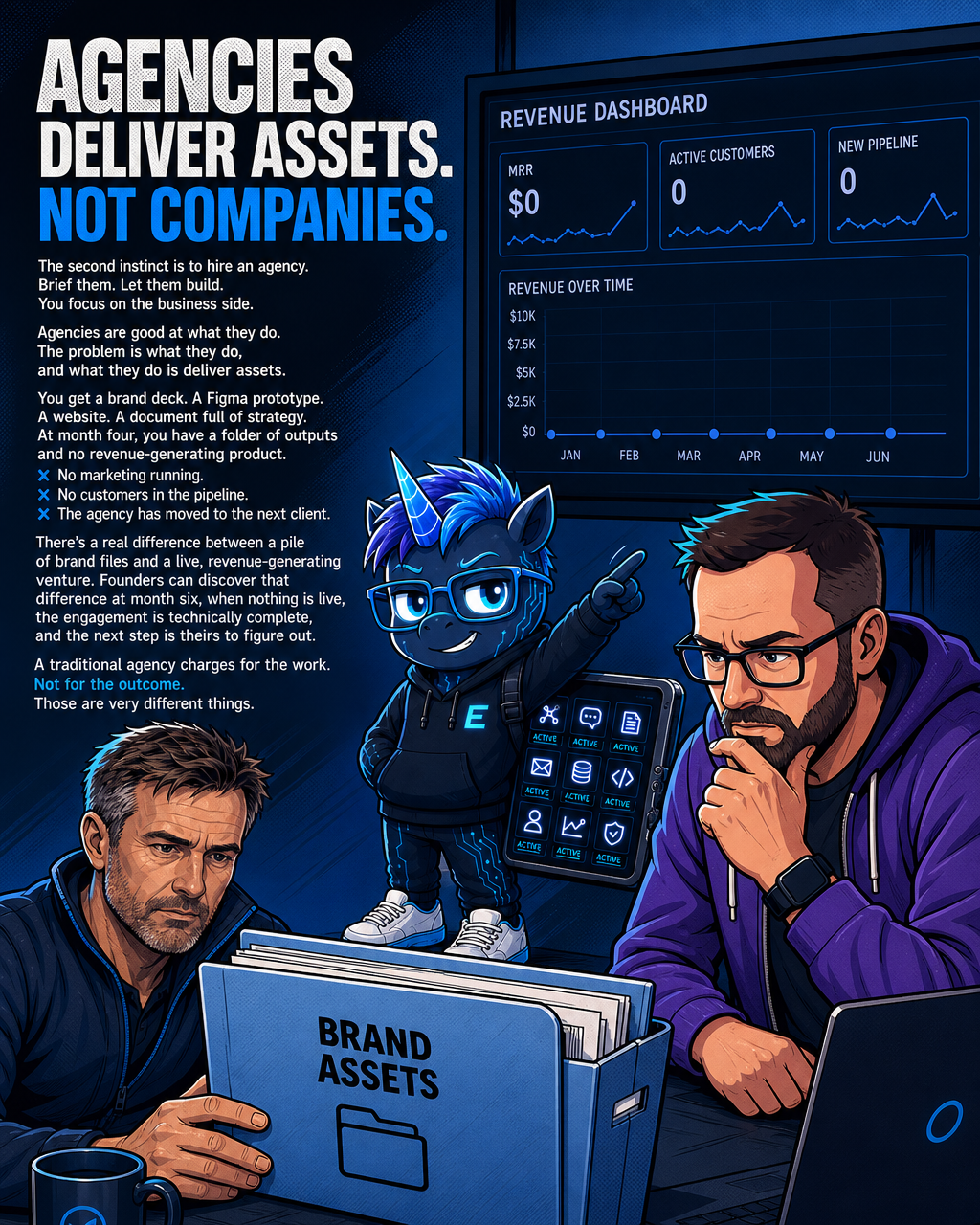
The second instinct is to hire an agency. Brief them. Let them build. You focus on the business side.
Agencies are good at what they do. The problem is what they do, and what they do is deliver assets.
You get a brand deck. A Figma prototype. A website. A document full of strategy. At month four, you have a folder of outputs and no revenue-generating product. No marketing running. No customers in the pipeline. The agency has moved to the next client.
There's a real difference between a pile of brand files and a live, revenue-generating venture. Founders can discover that difference at month six, when nothing is live, the engagement is technically complete, and the next step is theirs to figure out.
A traditional agency charges for the work. Not for the outcome. Those are very different things.
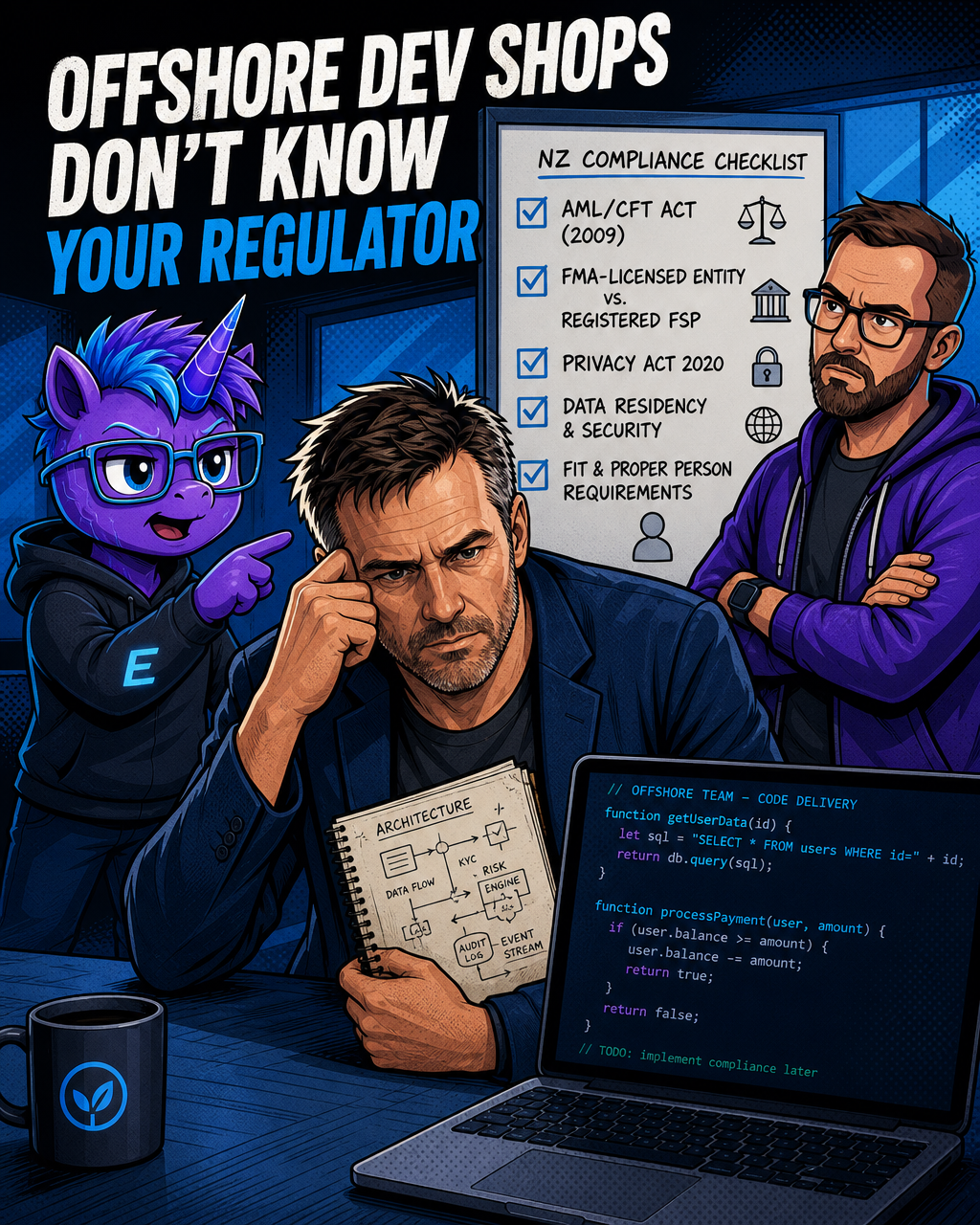
Offshore dev shops don't know your regulator
The third instinct, especially when NZ pricing feels prohibitive, is to go offshore. Eastern Europe. South Asia. Someone who can build it for a fraction of the price.
There are competent developers everywhere. That's not the issue. The issue is that building a NZ-regulated fintech product requires someone who has heard of the Anti-Money Laundering and Countering Financing of Terrorism Act. Who knows the difference between an FMA-licensed entity and a registered financial services provider. Who understands what the Privacy Act 2020 means for your data architecture before you're three sprints in.
A development team based overseas — operating in a distant timezone, with no NZ regulatory context — may build you a product that works technically but creates compliance gaps. You don't always discover the gap when you're writing the code. You may discover it at due diligence, or when the FMA asks a question you can't answer.
Compliance isn't a feature you add at the end. In NZ regulated verticals, it's a structural decision made in the first sprint. Retrofit costs can run to multiples of what getting it right from the start would have.
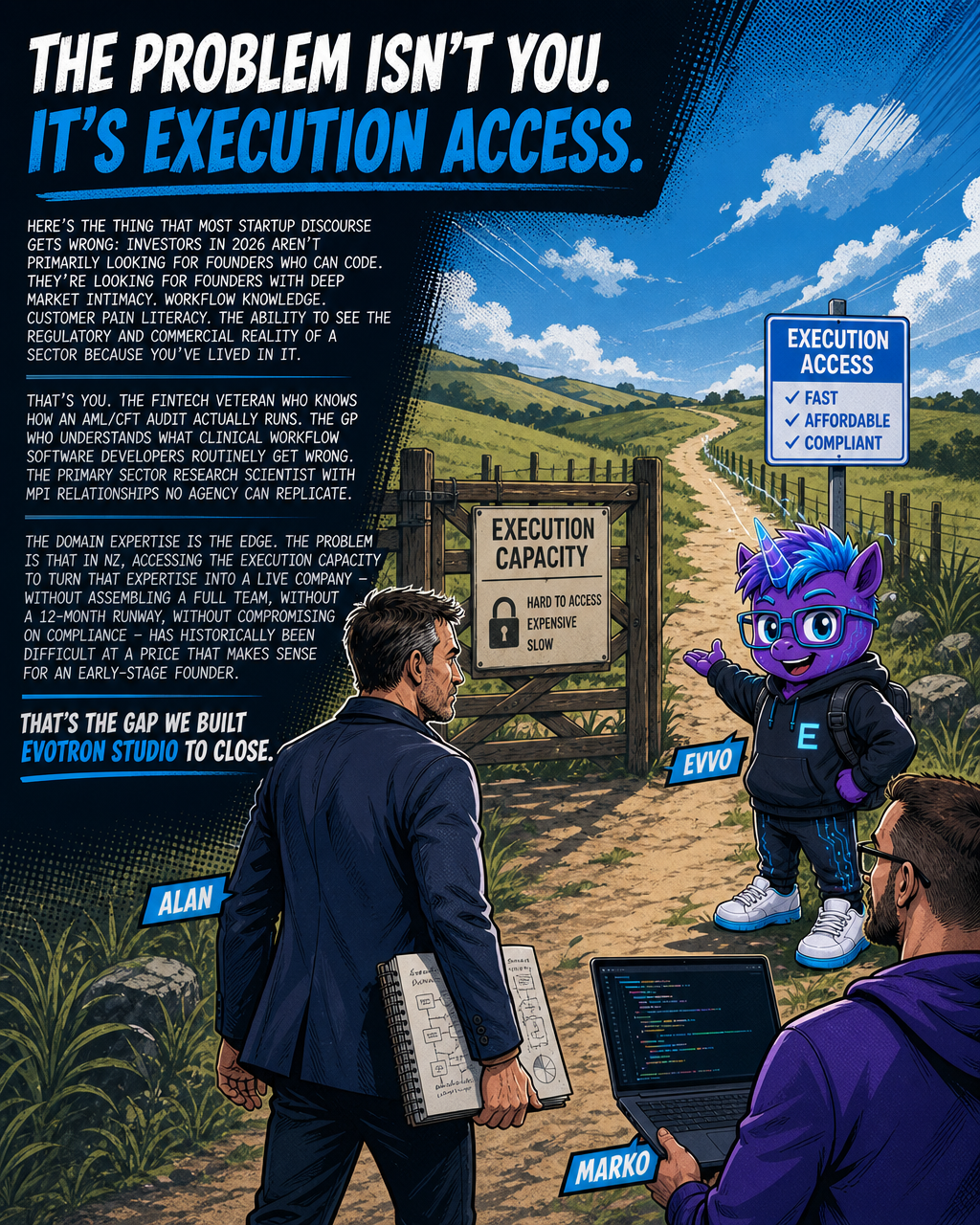
The problem isn't you. It's execution access.
Here's the thing that most startup discourse gets wrong: investors in 2026 aren't primarily looking for founders who can code. They're looking for founders with deep market intimacy. Workflow knowledge. Customer pain literacy. The ability to see the regulatory and commercial reality of a sector because you've lived in it.
That's you. The fintech veteran who knows how an AML/CFT audit actually runs. The GP who understands what clinical workflow software developers routinely get wrong. The primary sector research scientist with MPI relationships no agency can replicate.
The domain expertise is the edge. The problem is that in NZ, accessing the execution capacity to turn that expertise into a live company — without assembling a full team, without a 12-month runway, without compromising on compliance — has historically been difficult at a price that makes sense for an early-stage founder.
That's the gap we built Evotron Studio to close.
What we do differently
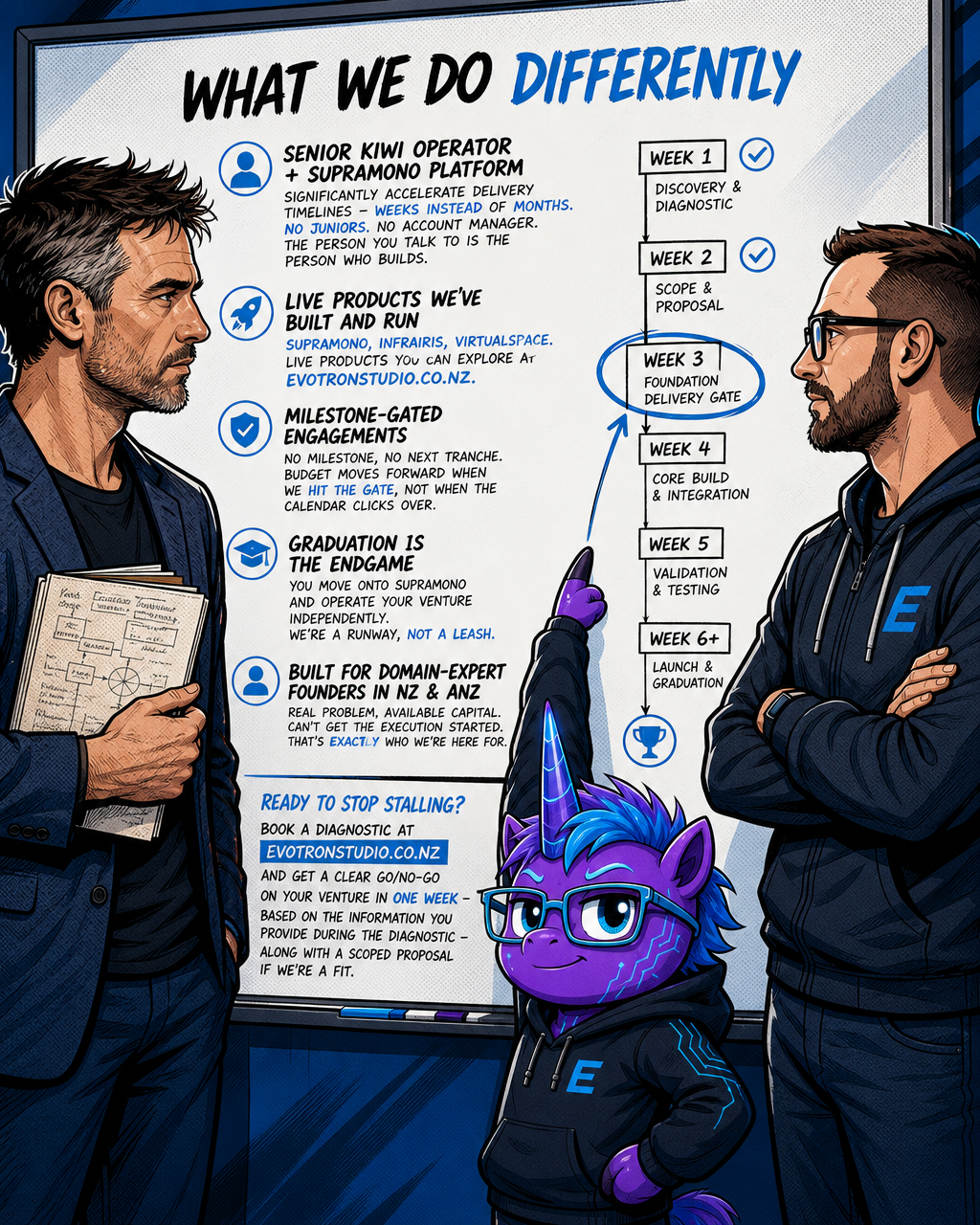
Evotron Studio pairs one senior Kiwi operator with our own agentic platform, Supramono, designed to significantly accelerate delivery timelines that would otherwise require a larger team — in weeks instead of months. No juniors hidden behind an account manager. The person you talk to is the person who builds.
We've built and run Supramono, Infrairis, and VirtualSpace. Those aren't case studies. They're live products you can explore at evotronstudio.co.nz.
Every engagement is milestone-gated. No milestone, no next tranche. Budget moves forward when we hit the gate, not when the calendar clicks over.
And every engagement ends with graduation — you move onto Supramono and operate your venture independently. We're a runway, not a leash.
If you're a domain-expert founder in NZ or ANZ who has a real problem and available capital but can't get the execution started, that's exactly who we're here for.
Ready to stop stalling? Book a Diagnostic at evotronstudio.co.nz and get a clear go/no-go on your venture in one week — based on the information you provide during the Diagnostic — along with a scoped proposal if we're a fit.

Evotron Studio
We build and run our own AI-amplified ventures — and bring the same capability into yours.
We build and run our own AI-amplified ventures — and bring the same capability into yours.
Learn more about Evotron Studio and get started today.
Visit Evotron Studio