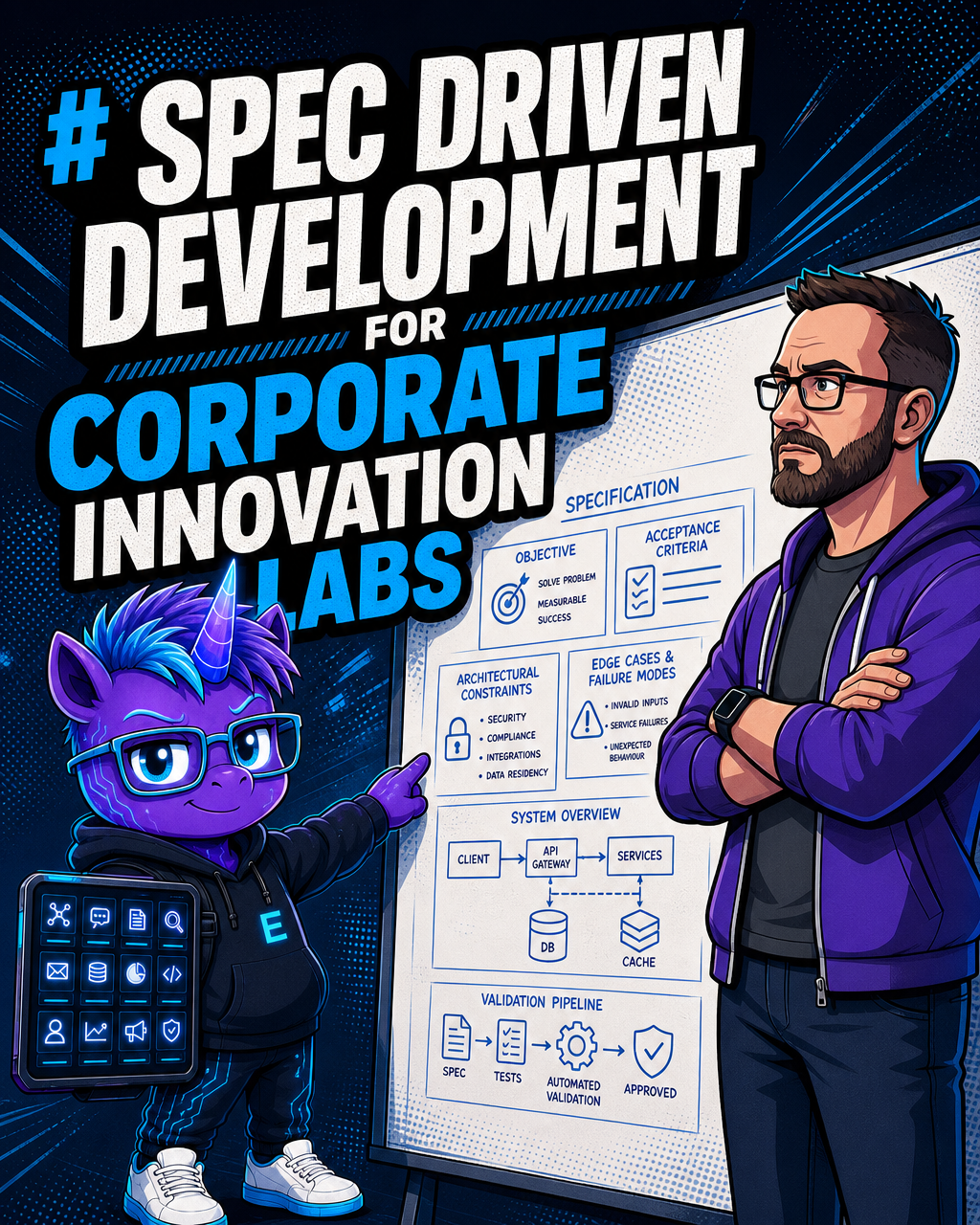
The 18-Month Rebuild Is a Death Sentence Now
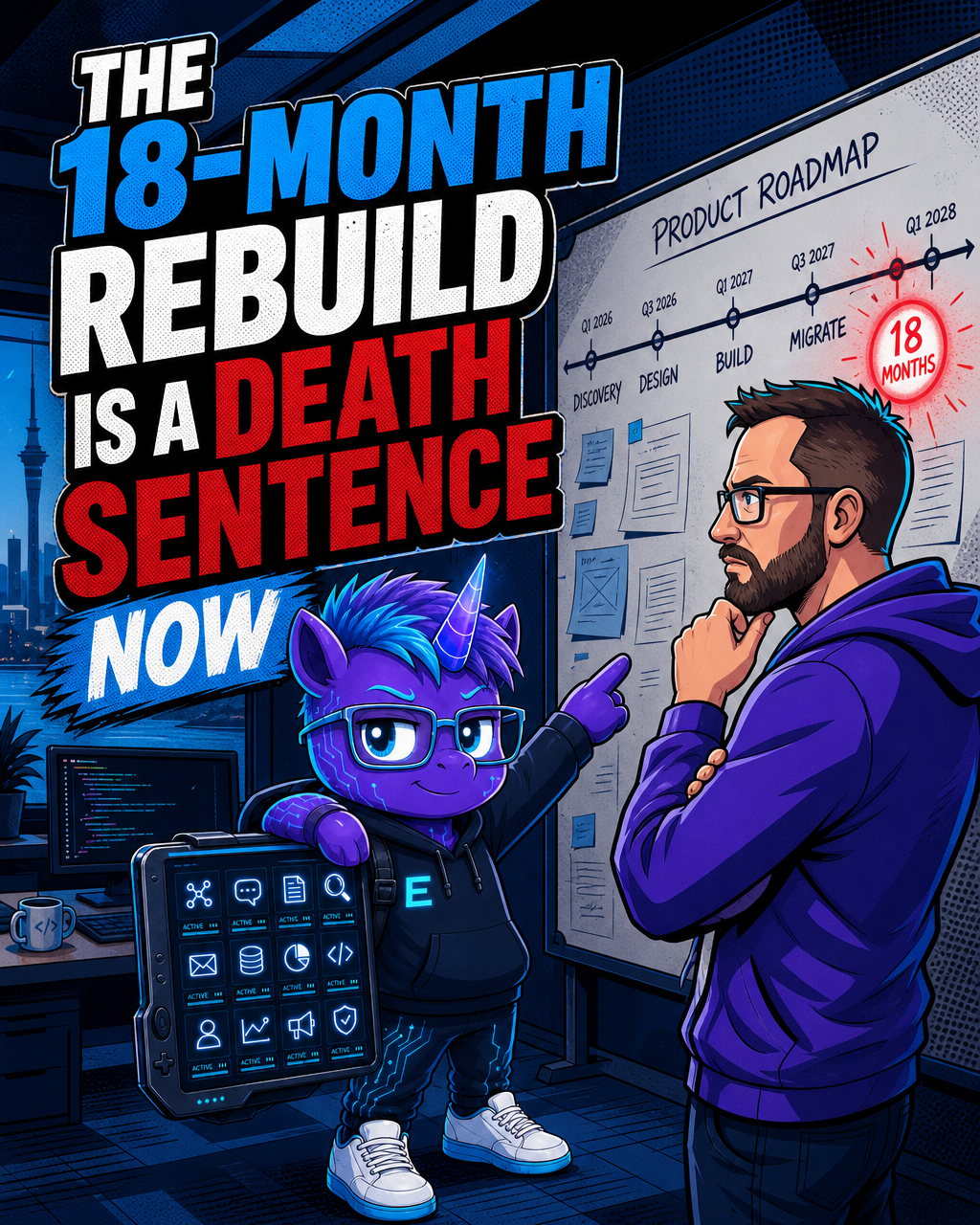



If your roadmap includes an 18-month platform rebuild, your competitors don't need to beat you. They just need to wait.
That's not hyperbole. It's the math of what's changed in software in 2026. The assumption that a rebuild buys you a competitive reset — that you emerge on the other side with a defensible product and a fresh start — is no longer how the market works for many businesses. The clock doesn't pause while you're heads-down in a migration. And when you come up for air, the finish line will have moved.
This post is for founders and technical leaders at established software businesses who are weighing a major rebuild. Not to talk you out of it, but to be straight about what you're actually deciding.
Your competitor shipped their version while you were still in discovery
The speed at which AI-native teams can produce a functionally comparable product has changed the risk calculation on long builds entirely.
Industry observers and founders consistently report that the time and cost to reach an initial working product has fallen dramatically since 2022, with AI-native teams moving materially faster than teams building on traditional approaches. That gap has widened since. For many well-defined use cases outside heavily regulated industries, the distance between "I have an idea" and "I have something working in front of users" has collapsed — from months and significant upfront investment to weeks and a comparatively modest monthly tooling cost.
That's the market you're rebuilding into. A two-person team with a clear vertical focus and the right tooling can have something in front of your customers before your internal design review is done — at least in many vertical SaaS contexts where compliance and complex integrations aren't gating factors. Vendor benchmarks on AI coding tools cite productivity gains ranging from significant to substantial depending on task type, though figures vary widely across tool, team, and codebase.
The question isn't whether AI-native entrants can build something comparable to what you have. In many categories, they already can. The question is how long your rebuild takes versus how long it takes them to reach your customers.
If your answer is 18 months, you've handed them an uncontested window. That's a meaningful competitive disadvantage.
The switching cost moat you're counting on is eroding
For most established software businesses, the survival logic goes something like this: customers are stuck. They've trained staff on your interface, integrated your APIs, built workflows around your quirks. Even if a better product exists, the cost to switch is high enough to keep them.
That logic held for a long time. It's eroding — at different speeds in different segments.
For two decades, SaaS companies built moats around user habits, data lock-in, and workflow integration. In SMB and horizontal tooling, AI agents are eroding several of these advantages simultaneously. When a competitor can offer a product that onboards users through natural language, integrates via agents rather than manual API configuration, and matches your core feature set without the training curve, the switching cost argument weakens considerably. In deeply integrated enterprise software and regulated industries, those switching costs remain more durable — but they are not immune to the same pressure over time.
Domain experts can now encode their methodology more directly. In many contexts, the engineering bottleneck has dissolved. In some verticals, markets that once had a handful of dominant incumbents now face dozens or hundreds of entrants — though market structure still varies enormously by sector.
This is the structural shift in motion. Your legacy product isn't just competing against better features. It's competing against a fundamentally lower friction entry point. Research into enterprise AI adoption has consistently found that a significant share of organisations struggle to generate material value from AI — not because the technology doesn't work, but because they're retrofitting it onto structures that were never designed for it. The founders who build AI-native from day one don't face that retrofit problem.
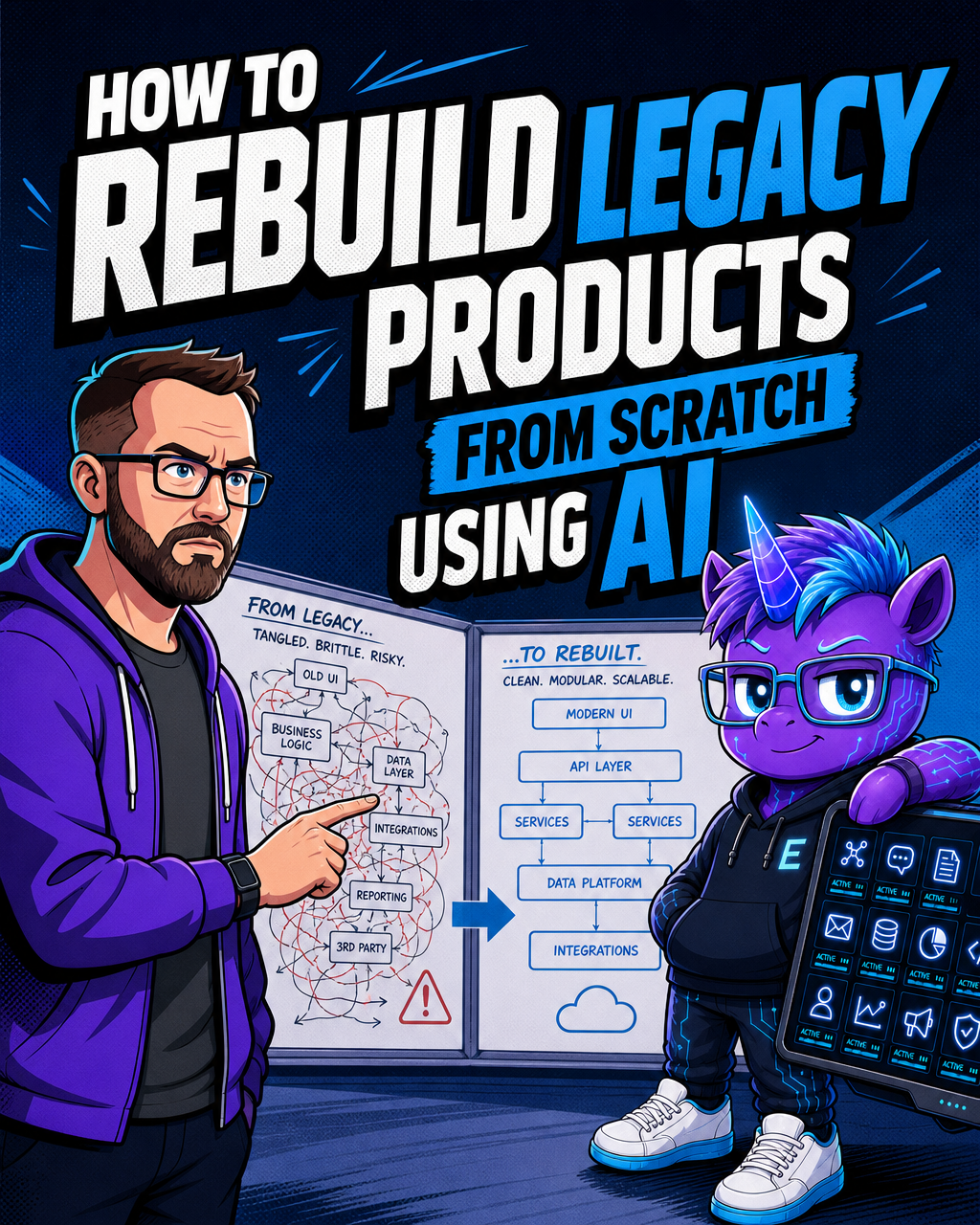
That retrofit problem is precisely what you face with an 18-month rebuild. You're trying to apply new architecture to an old problem, while new entrants are starting with the clean slate you're trying to earn.
The rebuild isn't stalling because the tech is hard
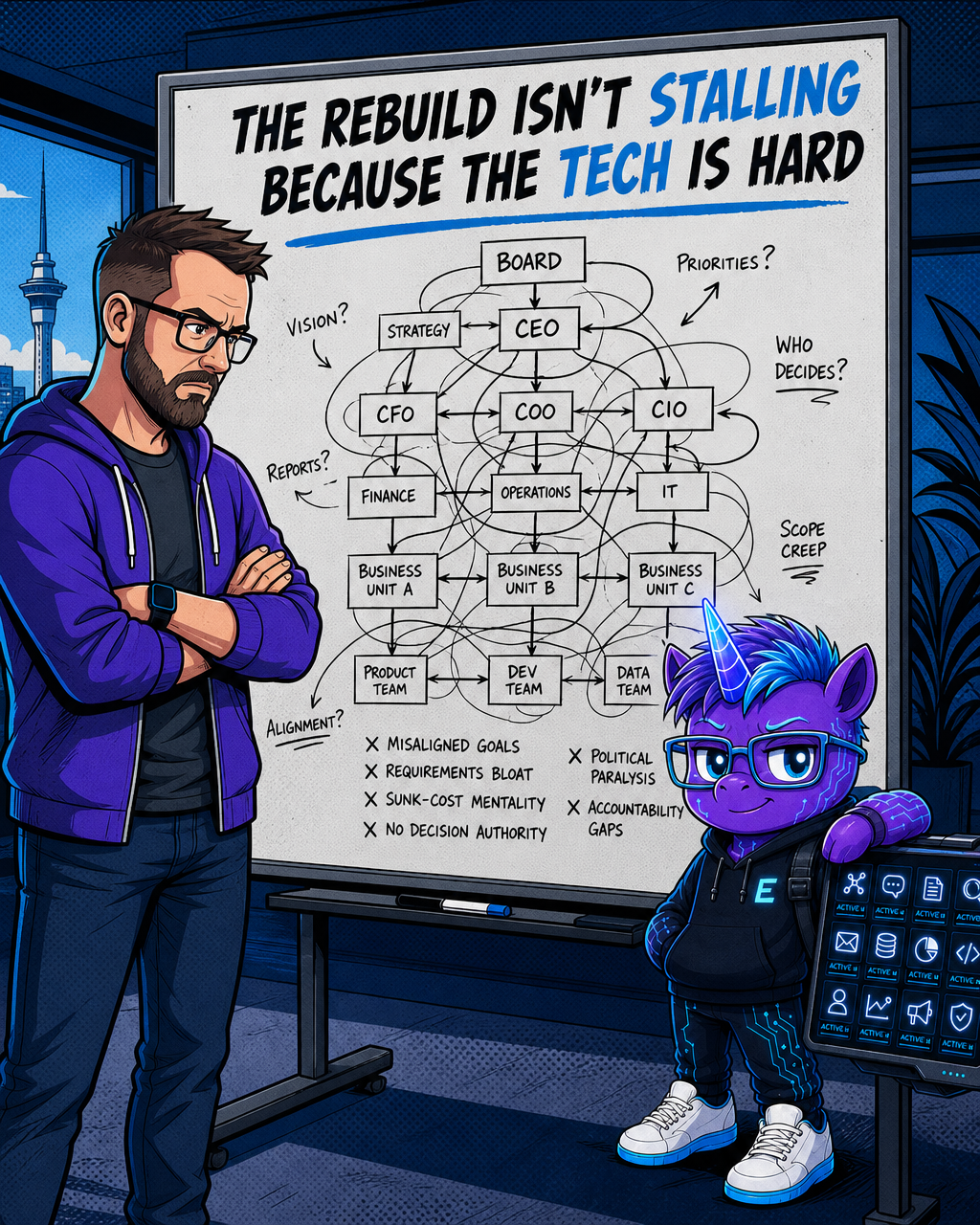
Here's the uncomfortable truth that most rebuild post-mortems eventually surface: the technical complexity rarely kills these projects. The organisation does.
It's a common complaint amongst tech and business leaders that software projects suffer long development delays and expensive cost overruns due to misalignment between the two. When specifications change, business and technical teams fall out of alignment. Operational goals diverge from technical feasibility.
Requirements bloat is the more common culprit. Scope creep is one of the most frequently cited drivers of IT project delays. A new feature here, an extra integration there — before long, the original timeline is impossible to meet. Each additional request pushes deadlines further out and increases the cost of delay.
The sunk-cost problem is just as damaging. Once a rebuild is 40% complete, the pressure to preserve the original architectural decisions — even when those decisions are demonstrably wrong — becomes enormous. Nobody wants to be the person who says the last six months were spent on the wrong foundation. So the wrong foundation gets defended, extended, and eventually shipped.
AI cannot fix the underlying organisational dysfunction that causes these failures. It cannot make your CEO show up to steering committee meetings. It cannot tell your CFO that his custom reporting requirement will add three months to the timeline. It cannot force your business units to abandon their pet processes.
This is worth sitting with. The teams running the smoothest large-scale builds in 2026 aren't necessarily the ones with the most senior engineers. They're the ones with the clearest decision-making authority and the lowest tolerance for scope expansion. Technical excellence doesn't rescue a politically paralysed project. It just makes the eventual write-off more expensive.
Shipping doesn't reset the competitive clock
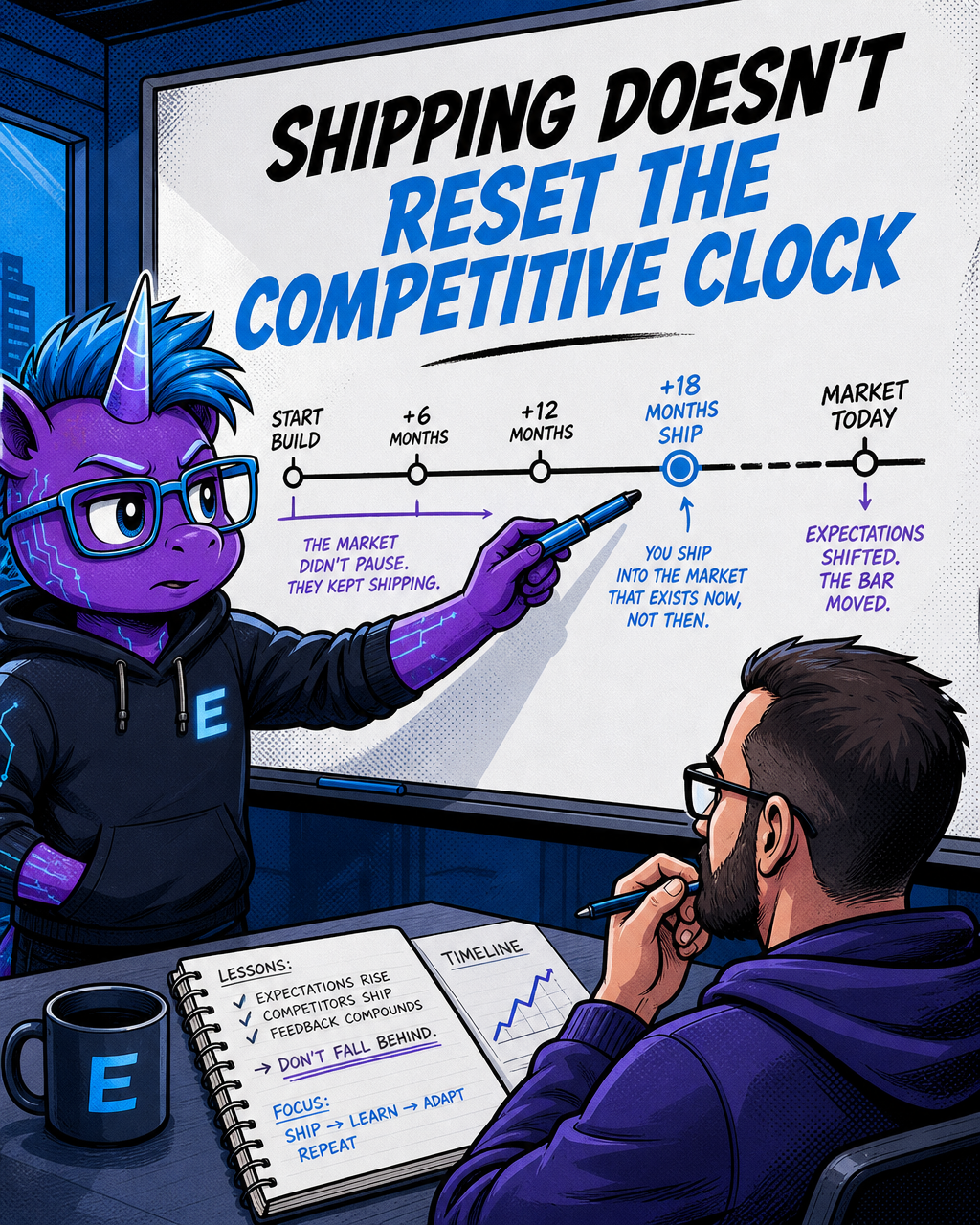
The most dangerous assumption in a long rebuild is that delivery is the finish line. It isn't.
When you finally ship — 18 months from now, or 24, or 30 — you won't land in the market that existed when you started the build. You'll land in whatever market exists then. And the teams who didn't pause to rebuild will have spent those 18 months shipping, iterating, and compounding their understanding of what customers actually want.
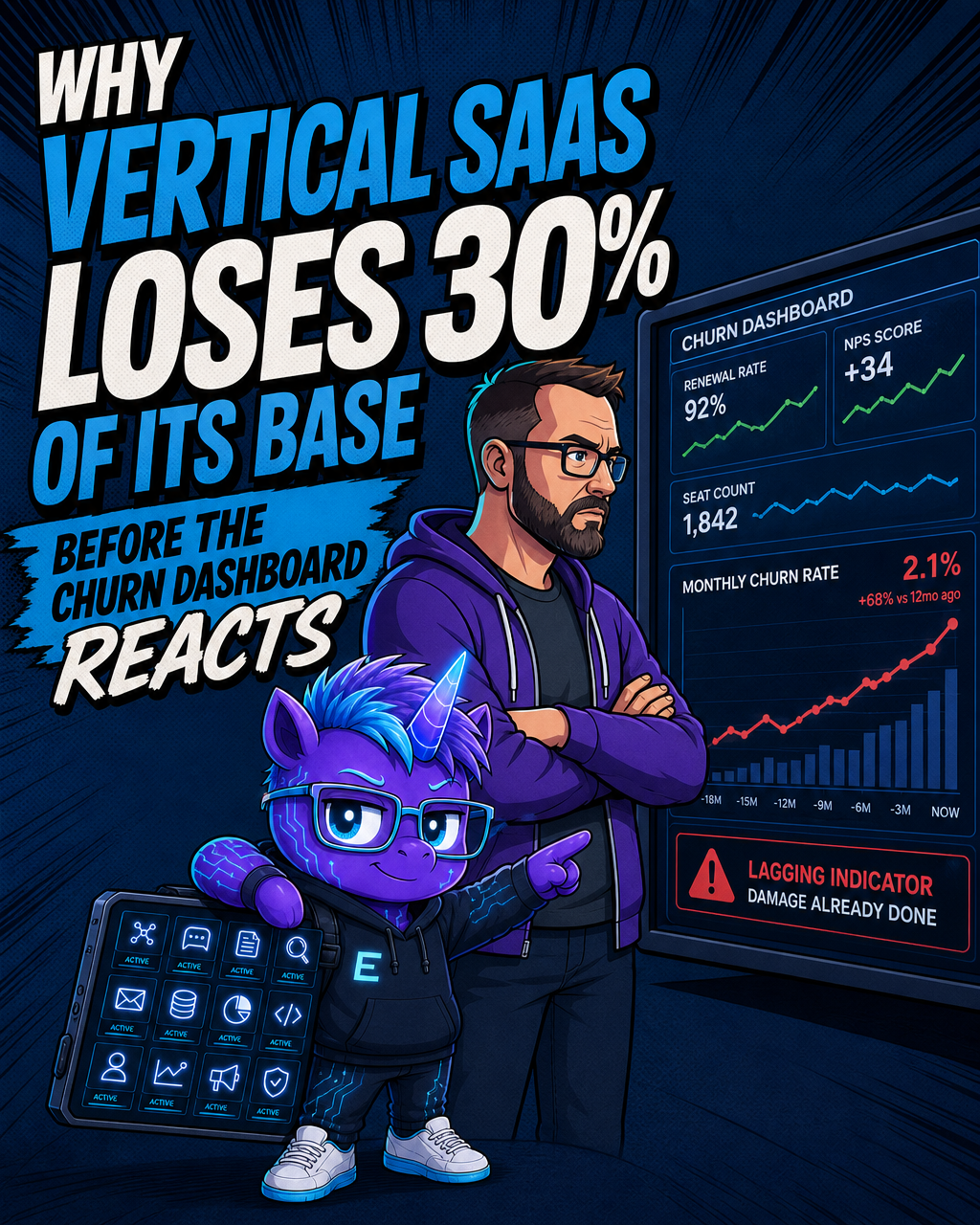
Some analysts pointed to slowing SaaS seat growth in late 2025 as partly connected to AI productivity gains reducing per-head licence demand — as AI-enhanced workers accomplish more with fewer licences. Macro factors and market saturation also played a role, and the causal picture remains contested, but the seat-reduction dynamic appeared in multiple earnings calls and investor discussions.
Market expectations don't freeze. A significant factor cited in investor commentary through 2025 and into 2026 was the rollout of reasoning models and coding agents — tools that can autonomously execute multi-step software workflows — alongside the broader AI investment cycle and macro conditions. The expectation of what a product should do, and how fast it should do it, shifted while some teams were mid-build. They shipped into a bar they'd measured 18 months earlier.
Competitors capturing your target audience directly impacts long-term revenue. But it's more than revenue. It's the compounding effect of customer feedback, product iteration, and market positioning that your rebuild effectively froze while it was running. You don't just arrive late. You arrive behind on the learning curve too.
This is the perpetual catch-up loop. Rebuild to meet today's standard. Ship into tomorrow's expectations. Realise you're already behind again. Start planning the next rebuild.
The rebuild-as-project framing is the structural problem
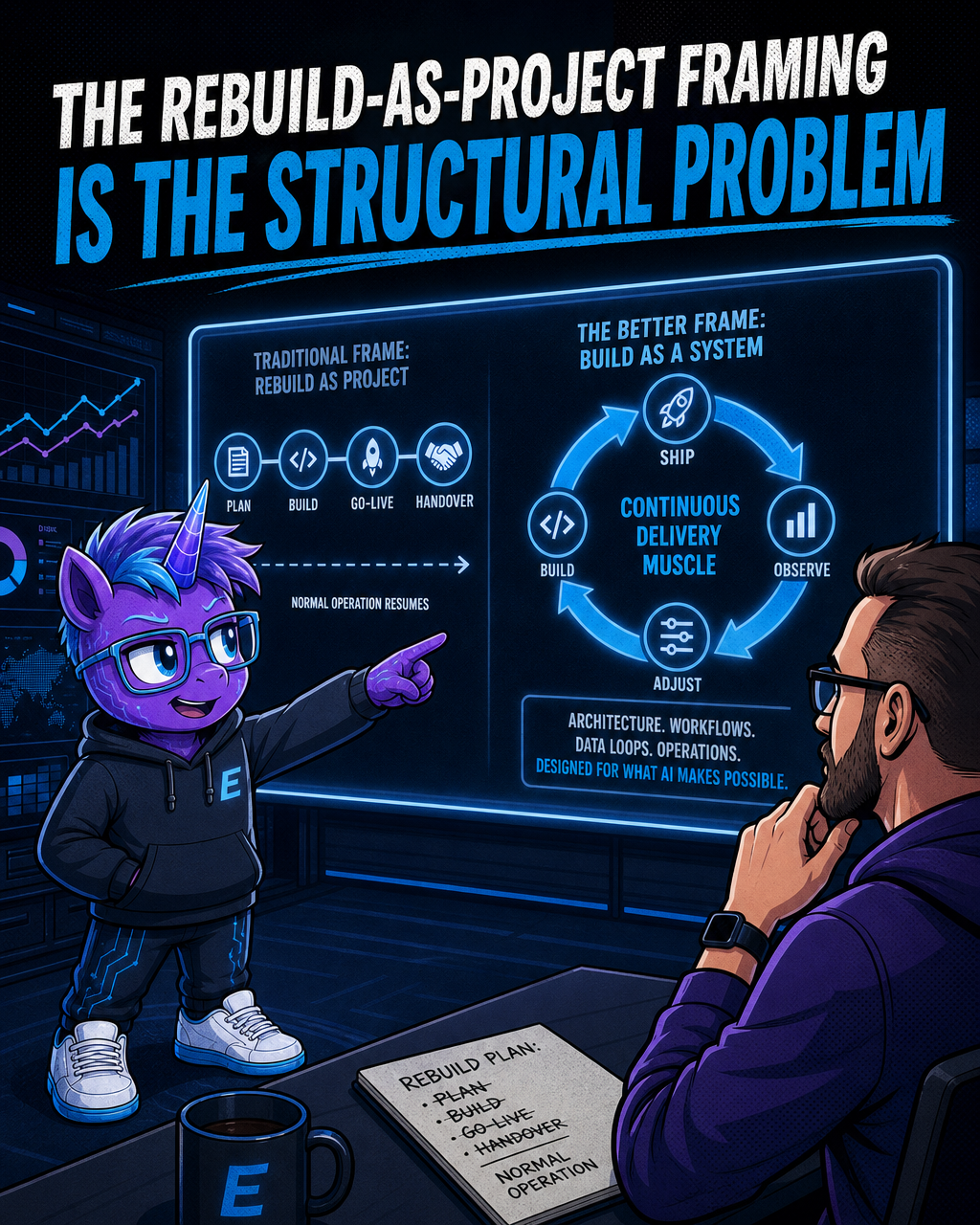
Most of the companies we talk to frame a major rebuild as a discrete event. A project. Something with a start date, a go-live, and a handover. After that, normal operation resumes.
This framing is the problem. It treats continuous product capability as something you acquire once and then own. But the teams winning in 2026 don't build products in isolation. They run build systems.
The gap between an AI-native startup and a traditional software company in 2026 isn't primarily about features — it's about architecture. AI-native founders don't add intelligence to a product. They design everything — the product, the workflows, the data loops, the operations — around what AI makes possible from day one.
The structural disadvantage of treating a rebuild as a one-time project is that you inherit the same problem on the other side. A new codebase doesn't change the underlying decision-making culture, the tolerance for scope creep, or the organisational ability to ship and iterate quickly. Those are capability questions, not technology questions.
The startups moving fastest carry no architectural debt. But the deeper advantage isn't the absence of legacy code. It's the presence of a continuous delivery muscle — the ability to ship, observe, adjust, and ship again without a committee sign-off process consuming half the cycle time.
If your rebuild plan doesn't include changing how you build after the rebuild, you're trading one set of constraints for a slightly newer one. The clock will still be against you.
What to do instead
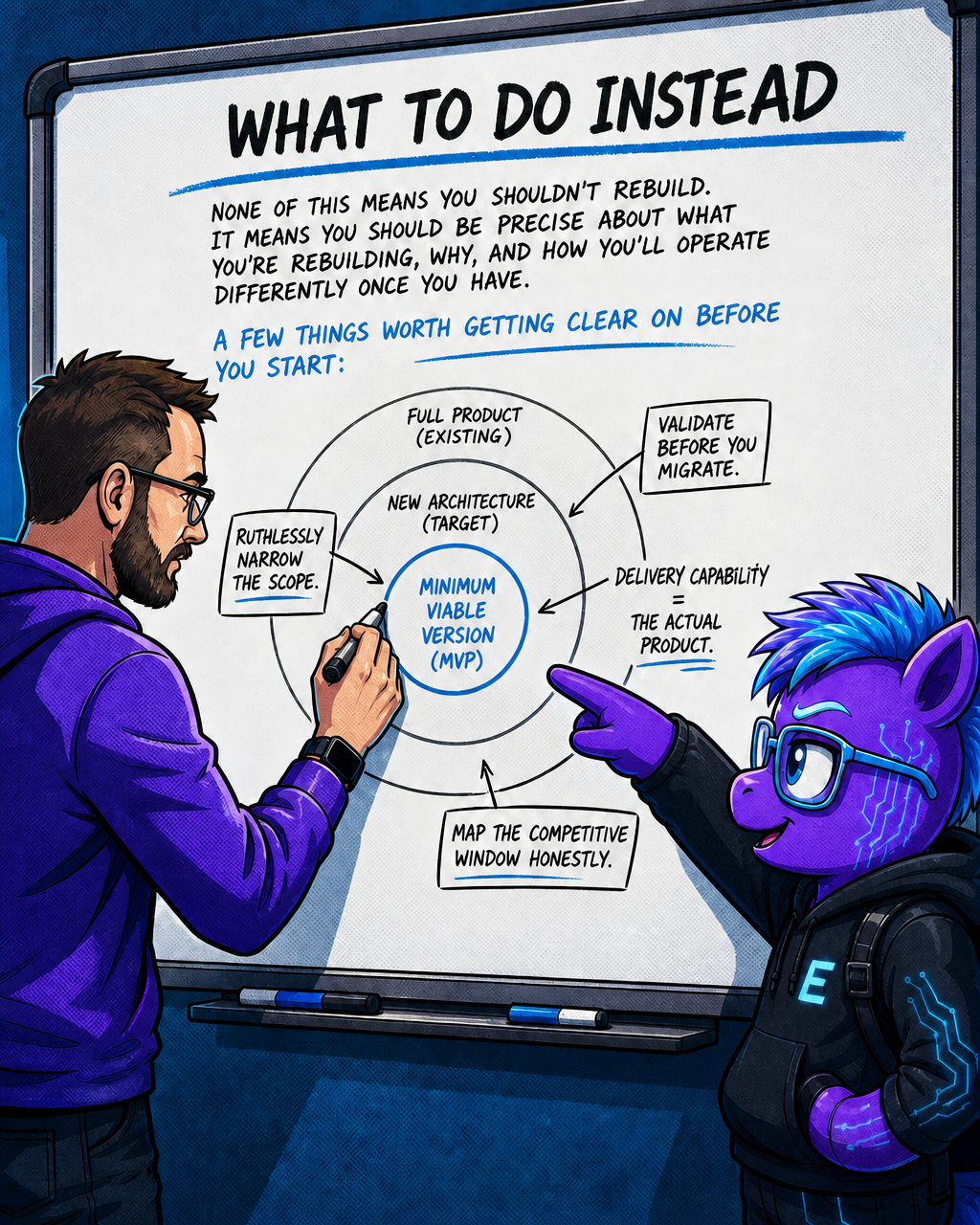
None of this means you shouldn't rebuild. It means you should be precise about what you're rebuilding, why, and how you'll operate differently once you have.
A few things worth getting clear on before you start:
Narrow the scope ruthlessly. The most common rebuild failure mode is a requirements doc that grows to mirror the entire existing product. Build the minimum viable version first. What's the smallest version of the new architecture that gets you into the market with real customers giving real feedback?
Validate before you migrate. An 18-month rebuild that discovers at month 14 that customers don't value the new architecture is not recoverable. Parallel-ship a thin slice of the new product to a segment of your customer base before committing the entire dev budget. Real usage data beats internal design review every time.
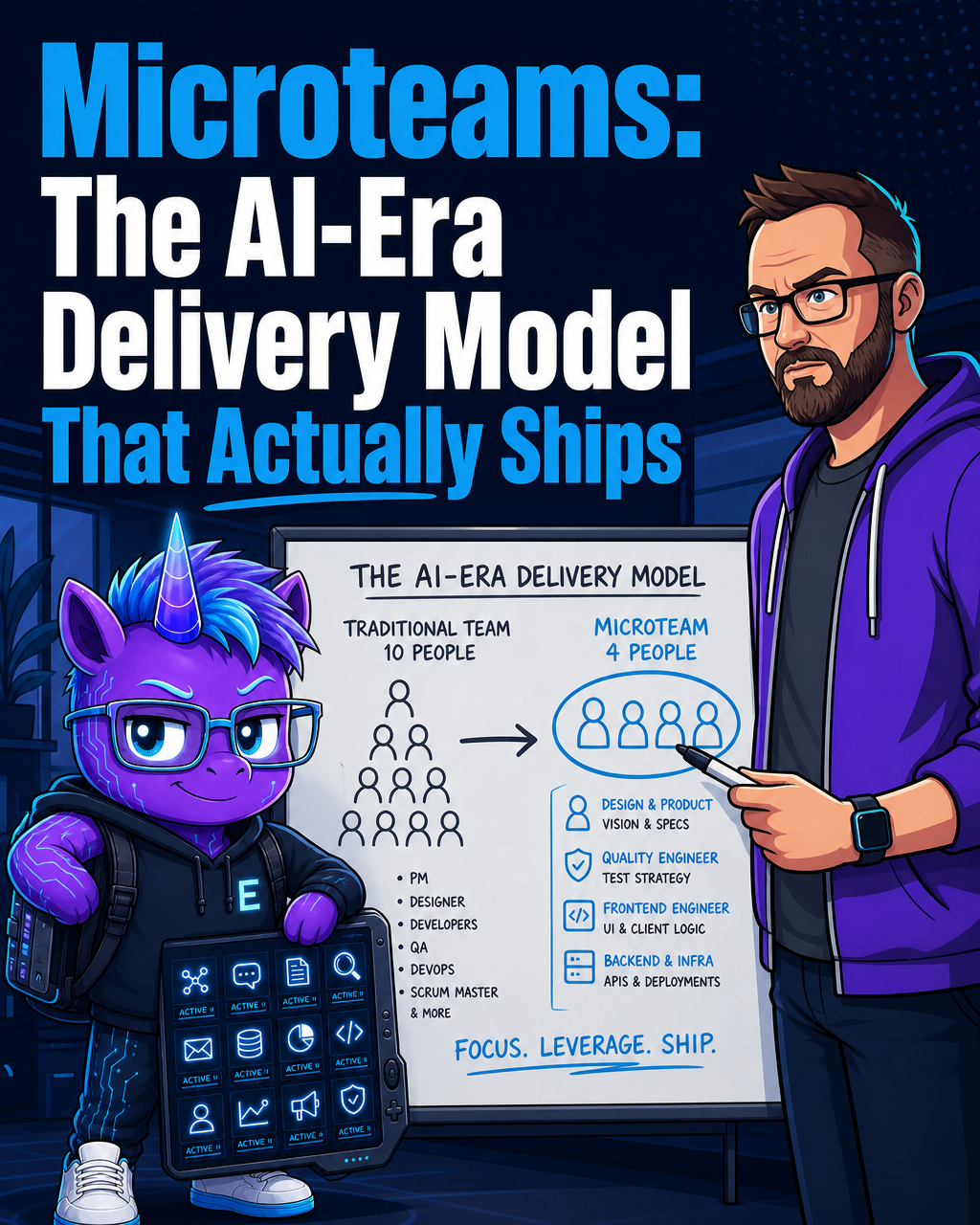
Treat delivery capability as the actual product. Industry analysts and practitioners broadly expect the developer role to shift toward orchestration and architecture over direct code authorship as AI tooling matures — though the pace and extent of that shift will vary by team and context. The teams that compound advantage are the ones building systems that keep shipping, not projects that eventually deliver. This is a cultural question as much as a technical one.
Map the competitive window honestly. If an AI-native competitor can ship a functionally comparable product in 8–12 weeks in your category, and your rebuild takes 18 months, you're not just late. You're handing them six or seven full product iteration cycles of uncontested market access. That's the real cost of the timeline. Put a number on it.
The plain version
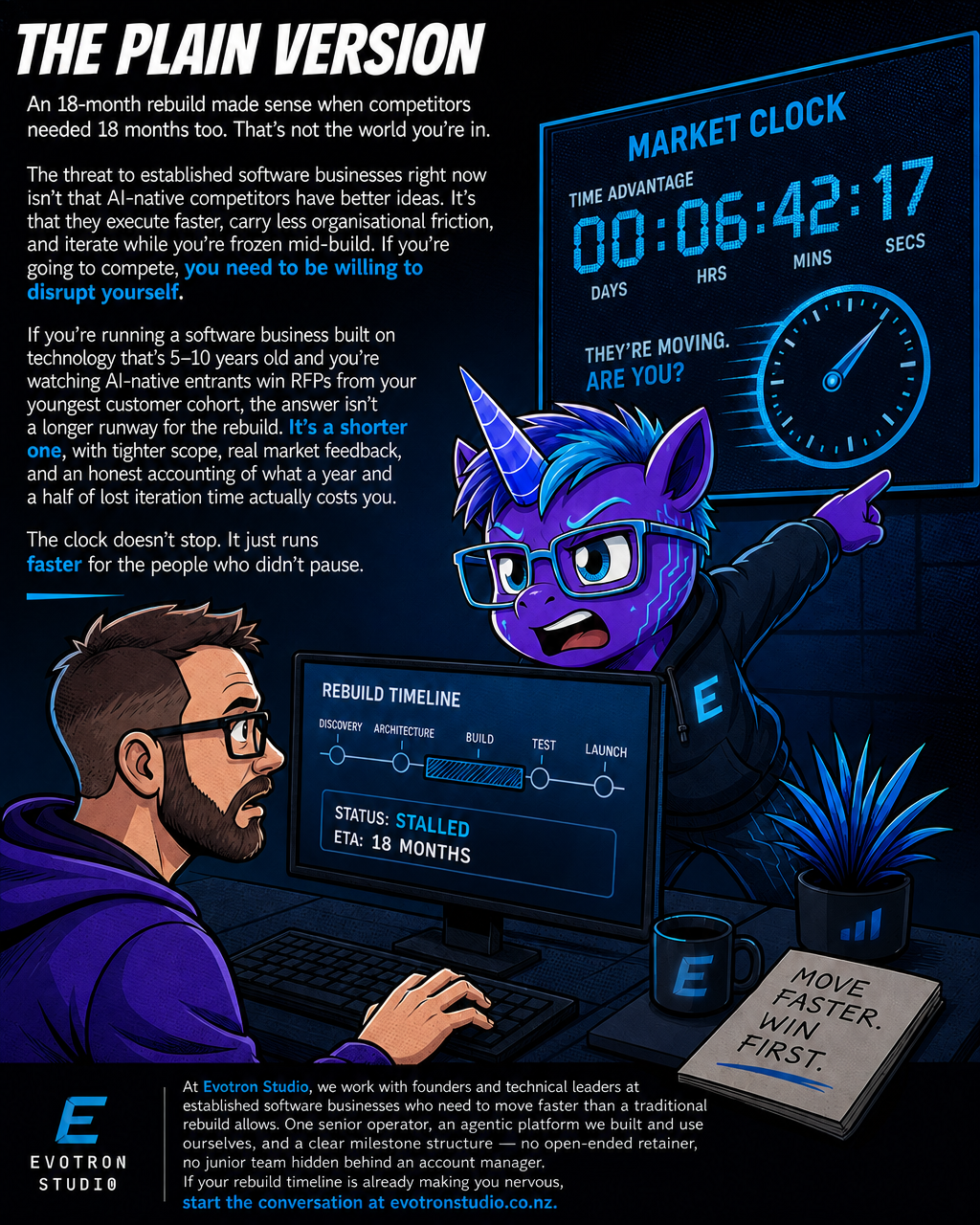
An 18-month rebuild made sense when competitors needed 18 months too. That's not the world you're in.
The threat to established software businesses right now isn't that AI-native competitors have better ideas. It's that they execute faster, carry less organisational friction, and iterate while you're frozen mid-build. If you're going to compete, you need to be willing to disrupt yourself.
If you're running a software business built on technology that's 5–10 years old and you're watching AI-native entrants win RFPs from your youngest customer cohort, the answer isn't a longer runway for the rebuild. It's a shorter one, with tighter scope, real market feedback, and an honest accounting of what a year and a half of lost iteration time actually costs you.
The clock doesn't stop. It just runs faster for the people who didn't pause.
At Evotron Studio, we work with founders and technical leaders at established software businesses who need to move faster than a traditional rebuild allows. One senior operator, an agentic platform we built and use ourselves, and a clear milestone structure — no open-ended retainer, no junior team hidden behind an account manager. If your rebuild timeline is already making you nervous, start the conversation at evotronstudio.co.nz.
Related reading

Evotron Studio
We build and run our own AI-amplified ventures — and bring the same capability into yours.
We build and run our own AI-amplified ventures — and bring the same capability into yours.
Learn more about Evotron Studio and get started today.
Visit Evotron Studio